What Is Workplace Safety Software? A Complete Guide for Field Teams
Table of Contents
- What Is Workplace Safety Software?
- Why Field Teams Require Specialized Safety Software
- Workplace Safety Software for Lone Workers
- Core Features of Workplace Safety Software
- The Role of Workplace Safety Software in Safety and Compliance
- Workplace Safety Software and Regulatory Standards
- How Workplace Safety Software Reduces Risk
- Operational Benefits Beyond Safety
- How a Safety Company Delivers Value Through Technology
- Workplace Safety Software vs Traditional Safety Programs
- Industries That Benefit Most from Workplace Safety Software
- How to Choose the Right Workplace Safety Software
- The Future of Workplace Safety Software
- Frequently Asked Questions About Workplace Safety Software
- Why Workplace Safety Software Is Now Essential
Workplace accidents, compliance failures, and operational disruptions remain major challenges for organizations managing remote and field-based teams. As work environments become more dynamic and decentralized, traditional safety processes are no longer enough.
This is where workplace safety software becomes essential.
Modern digital platforms help organizations protect employees, reduce risk exposure, strengthen safety and compliance processes, and gain full visibility over field operations. For companies managing security personnel, construction workers, maintenance crews, facility managers, utilities teams, or lone workers, workplace safety software is no longer optional — it is foundational.
In this complete guide, we’ll explain what workplace safety software is, how it works, why field teams need it, and how to choose the right solution for your organization.
What Is Workplace Safety Software?
Workplace safety software is a digital platform designed to help organizations monitor, manage, document, and improve employee safety across worksites and field operations.
Unlike paper-based safety logs or manual reporting systems, workplace safety software centralizes safety management in a single system. It enables real-time monitoring, incident reporting, compliance tracking, risk assessment documentation, and emergency response coordination.
For field teams specifically, this technology functions as both a protective tool and an operational management system.
In practical terms, workplace safety software helps organizations prevent workplace incidents, respond faster to emergencies, maintain structured safety and compliance documentation, monitor remote employees in real time, and reduce overall legal and financial risk. By centralizing these processes in a single digital environment, companies move from fragmented oversight to a fully integrated safety management approach.
For a deeper look at how digital protection translates into measurable business results, explore how investing in safety technology directly impacts costs, risk exposure, and operational downtime in our detailed guide on the ROI of safety at work.
Why Field Teams Require Specialized Safety Software
Field workers operate in environments that often include:
 Isolated job sites
- Hazardous conditions
- Unpredictable external risks
- Equipment-related dangers
- Limited supervision
Traditional office-based safety protocols cannot adequately protect these teams.
That’s why a modern safety company must provide solutions tailored to remote operations. Field-focused safety software includes features such as GPS tracking, Man Down detection, geofence alerts, welfare checks, and real-time communication tools.
Without digital oversight, organizations face delayed response times, incomplete reporting, and significant liability exposure.
Workplace safety software bridges this gap by offering visibility and control across distributed teams.
Workplace Safety Software for Lone Workers
Lone workers face unique risks because they operate without direct supervision or immediate assistance. Whether conducting night security patrols, performing remote maintenance, inspecting facilities, or working in isolated environments, lone workers are more vulnerable to delayed emergency response and unreported incidents.
Workplace safety software plays a critical role in protecting lone workers by providing real-time monitoring, automated Man Down detection, scheduled welfare checks, and instant SOS alerts. These features ensure that even when employees are physically alone, they are digitally connected to supervisors and support teams.
For organizations employing lone workers, digital oversight is not just operationally beneficial — it is a core safety and compliance responsibility. A structured safety software solution ensures that no worker is ever truly unsupported, even in the most isolated conditions.
Core Features of Workplace Safety Software
Not all safety software platforms are built equally. High-quality systems designed for field teams typically include the following capabilities.
1. Real-Time Monitoring
Real-time visibility allows supervisors to monitor worker locations, task completion, and incident triggers instantly. This is critical in high-risk environments where rapid response can prevent severe injury.
2. Incident Reporting and Documentation
Digital reporting tools allow workers to submit incident reports, attach photos, add notes, and record timestamps directly from the field. This strengthens safety and compliance documentation while reducing paperwork delays.
3. Emergency Alerts and Panic Buttons
A robust workplace safety software solution includes SOS alerts and panic button functionality. In dangerous situations, workers can instantly notify supervisors and transmit location data.
Advanced systems also offer wearable panic buttons for situations where a smartphone cannot be accessed.
4. Man Down Detection
Man Down technology automatically triggers an alert if a worker collapses or remains motionless for a specified period. This automated protection significantly reduces response times during emergencies.
5. Welfare Checks
Scheduled welfare check-ins ensure that workers confirm their safety at designated intervals. If a check-in is missed, supervisors receive automatic alerts.
6. Geofencing
Geofence alerts notify managers if workers enter or exit designated zones. This is especially useful in hazardous or restricted areas.
7. Compliance and Audit Trails
Maintaining structured digital records is essential for regulatory inspections. Workplace safety software automatically stores logs of alerts, reports, location history, and response actions, strengthening safety and compliance management.
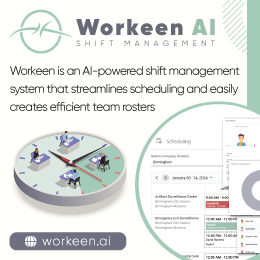
Optimize Your Scheduling with Workeen AI
Transform your workforce management with Workeen AI, the AI-powered shift management system designed to simplify scheduling for industries with round-the-clock operations. Effortlessly create efficient rosters, manage unexpected absences, and ensure fair work distribution with predictive insights and real-time updates. Boost productivity and compliance while keeping your team informed through instant communication tools.
The Role of Workplace Safety Software in Safety and Compliance
Regulatory requirements around workplace safety continue to tighten globally. Employers are legally responsible for protecting employees from foreseeable risks.
A digital safety software solution strengthens safety and compliance by:
- Recording safety checks and inspections
- Storing incident documentation
- Maintaining timestamped communication logs
- Tracking corrective actions
- Generating compliance reports
In the event of an investigation, organizations can demonstrate proactive safety management rather than reactive damage control.
For any safety company serving regulated industries, compliance support must be a core feature — not an afterthought.
Workplace Safety Software and Regulatory Standards
Workplace safety software does not operate in isolation — it supports compliance with established regulatory frameworks that define employer responsibilities. Leading authorities such as the Occupational Safety and Health Administration (OSHA) in the United States and the Health and Safety Executive (HSE) in the United Kingdom clearly outline the obligation of employers to protect workers from foreseeable hazards.
OSHA guidance emphasizes that employers must provide a workplace free from recognized risks that are likely to cause serious harm. Similarly, HSE regulations require structured risk assessments, incident documentation, and proactive safety management practices across all industries.
By implementing structured workplace safety software, organizations align their internal safety processes with these regulatory expectations. Digital audit trails, automated reporting, and real-time monitoring tools help companies demonstrate active safety and compliance management during inspections or investigations.
For any safety company serving regulated industries, integrating regulatory awareness into safety software is not optional — it is essential.
How Workplace Safety Software Reduces Risk
The benefits of workplace safety software extend well beyond meeting compliance requirements. Its true value lies in risk reduction.
Faster emergency response is one of the most immediate advantages. Instant alerts significantly reduce response time during medical emergencies, equipment failures, or environmental hazards.
Data-driven insights also play a critical role. By analyzing incident patterns, near-misses, and high-risk locations, organizations can address vulnerabilities before they escalate into serious events.
Automation reduces human error by ensuring scheduled check-ins, alerts, and reporting requirements are consistently enforced.
Most importantly, structured documentation protects organizations from liability claims by demonstrating clear safety and compliance protocols.
By combining real-time oversight with predictive insights, workplace safety software reduces both operational and financial risk.
Reducing risk is only part of the equation. Organizations that implement structured workplace safety software often see measurable financial returns through lower insurance premiums, fewer incidents, and minimized downtime — outcomes explored in more detail in our analysis of how a safety app improves the ROI of safety at work.
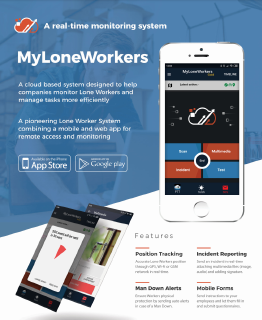
Request Your MyLoneWorkers Demo
Get hands-on with a demo account and see how MyLoneWorkers’ man down monitoring system helps you safeguard workers, manage incidents, and stay compliant.
Operational Benefits Beyond Safety
Although protection is the primary goal, workplace safety software also improves broader operational efficiency.
Integrated monitoring systems enhance workforce accountability by verifying task completion and tracking field activity in real time. This transparency strengthens managerial oversight without requiring constant physical supervision.
Many modern safety software platforms also incorporate asset tracking capabilities. Organizations can monitor equipment, keys, and devices, ensuring accountability and reducing loss.
Time and attendance management features improve payroll accuracy and workforce planning, while AI-powered reporting tools allow managers to generate operational insights through natural-language queries.
These expanded capabilities transform workplace safety software into a comprehensive field management platform that supports both protection and productivity.
How a Safety Company Delivers Value Through Technology
Choosing the right safety company is just as important as choosing the right software.
A reliable provider should offer:
- Cloud-based infrastructure
- Scalable deployment
- Mobile accessibility (iOS and Android)
- Secure data storage
- Integration capabilities
- Dedicated customer support
Field teams require technology that works in real-world conditions — not just in controlled office environments.
A professional safety company understands the operational realities of construction sites, security patrols, remote inspections, hospitality operations, and utility maintenance teams.
Workplace Safety Software vs Traditional Safety Programs
Traditional safety programs often rely on paper logs, manual supervision, delayed reporting, and reactive investigations. These systems are slow, fragmented, and difficult to audit.
In contrast, workplace safety software delivers real-time digital monitoring, automated alerts, centralized documentation, immediate reporting, and predictive analytics. The shift is not incremental — it is transformational.
Organizations that adopt digital safety software move from compliance-based safety management to performance-driven safety leadership.
Industries That Benefit Most from Workplace Safety Software
While nearly every industry can benefit from safety software, field-intensive sectors see the greatest impact.
Workplace safety software delivers the greatest impact in industries where employees operate remotely or in high-risk environments. Security services, construction firms, utilities and energy providers, facility management teams, hospitality operations, property maintenance companies, transportation providers, and healthcare field teams all benefit from structured digital oversight. In these sectors, operational complexity and distributed worksites make real-time safety and compliance management essential.
In each of these industries, remote work environments and operational complexity make digital safety and compliance management critical.
Ready to Improve Safety at Work Across Your Organization?
If your organization manages remote teams, field technicians, security officers, or high-risk operations, investing in a modern safety app is one of the smartest strategic decisions you can make.
MyLoneWorkers provides the real-time monitoring, emergency response, and AI-powered reporting tools your teams need to stay protected and productive.
How to Choose the Right Workplace Safety Software
When selecting workplace safety software, organizations should evaluate scalability, usability, compliance functionality, and real-time capabilities. The platform should be able to grow alongside the organization, offer an intuitive mobile interface for field workers, and allow customization of workflows and alert systems. Integration with payroll, scheduling, and asset management systems is also critical to ensure seamless operations. Most importantly, the software must provide true live monitoring and automated emergency alerts to deliver meaningful protection in high-risk environments. Selecting the right workplace safety software requires balancing protection, usability, and operational functionality.
The Future of Workplace Safety Software
Technology continues to reshape how organizations approach safety and compliance.
Emerging innovations include predictive risk modeling, AI-driven incident analysis, wearable safety devices, automated compliance scoring, and integrated workforce management ecosystems.
As safety software becomes more intelligent, organizations gain deeper insights into workforce behavior, risk exposure, and operational performance. The future of workplace safety software lies in connected, cloud-based systems that provide complete visibility across every location and team member.
Frequently Asked Questions About Workplace Safety Software
What is workplace safety software used for?
Workplace safety software is used to monitor, manage, and improve employee protection across worksites and field operations. It enables real-time incident reporting, emergency alerts, compliance tracking, risk documentation, and workforce visibility. For organizations with remote teams, workplace safety software centralizes safety and compliance processes into one digital platform.
How does workplace safety software improve safety and compliance?
Workplace safety software improves safety and compliance by automatically recording safety checks, incident reports, corrective actions, and communication logs. This creates structured digital audit trails that support regulatory inspections and internal audits. By replacing manual paperwork with automated reporting, companies reduce errors and strengthen accountability.
What features should good safety software include?
Effective safety software should include real-time monitoring, SOS or panic alerts, Man Down detection, incident reporting tools, geofencing, and compliance documentation capabilities. Advanced platforms may also offer asset tracking, time and attendance management, and AI-powered reporting to improve operational efficiency alongside safety.
Which industries benefit most from workplace safety software?
Industries with remote or high-risk work environments benefit the most from workplace safety software. This includes security services, construction, utilities, facility management, hospitality, transportation, and healthcare field operations. In these sectors, structured safety software ensures consistent oversight across distributed teams.
How do I choose the right safety company for workplace safety software?
When selecting a safety company, organizations should evaluate reliability, scalability, customer support, compliance expertise, and real-time monitoring capabilities. The right provider should offer secure cloud infrastructure, mobile accessibility, and customizable workflows that align with field operations.
Is workplace safety software suitable for small and mid-sized businesses?
Yes. Modern workplace safety software is scalable and can be tailored to small and mid-sized businesses as well as large enterprises. Cloud-based deployment allows organizations to implement safety software without major infrastructure investment while still improving safety and compliance performance.
What is the difference between traditional safety programs and digital safety software?
Traditional safety programs rely heavily on paper documentation and manual supervision, which can lead to delays and incomplete reporting. Workplace safety software digitizes these processes, enabling real-time alerts, centralized data storage, automated compliance tracking, and faster emergency response.
Test MyLoneWorkers for Free
Discover how MyLoneWorkers protects lone and field workers with man down alarms, real-time monitoring, and automated safety alerts. No installation or commitment required.
Final Thoughts: Safety at Work Is a Strategic Investment
In today’s distributed workforce environment, safety cannot rely on outdated methods.
The real question is:
Can they afford not to?
Workplace safety software provides:
- Real-time visibility
- Structured safety and compliance processes
- Faster emergency response
- Reduced liability risk
- Improved operational efficiency
- Data-driven safety insights
For any modern safety company, digital transformation is no longer a competitive advantage — it is a necessity.
Organizations that adopt intelligent safety software solutions protect not only their employees but also their financial stability, reputation, and long-term growth.
Workplace safety software is not just a technology investment.
It is a strategic foundation for building safer, smarter, and more resilient field operations.
If you’re evaluating digital safety solutions for your organization, understanding the financial impact is just as important as understanding the features. Learn how investing in a modern safety app reduces risk, costs, and downtime by reviewing our complete breakdown of the ROI of safety at work.
Book a demo and discover how MyLoneWorkers can transform your safety strategy.
About MyLoneWorkers
MyLoneWorkers innovative system reduces the risks and guarantees that every lone worker returns home safely after carrying out their tasks at work which is one of the most basic responsibilities for an employer. It is a real time lone worker monitoring system which skyrockets the efficiency of lone workers’ safety and the completion of their tasks offering them the ability to increase their productivity via technology.