Why Safety Monitoring Systems Matter for Remote Field Operations
Table of Contents
- The Unique Safety Challenge of Remote Field Operations
- What Safety Monitoring Systems Actually Do
- Legal Obligations and the Lone Worker Check-In System
- MyLoneWorkers: Safety Monitoring Systems Built for the Field
- Core Safety Monitoring Features of MyLoneWorkers
- Additional Features That Strengthen the Safety Monitoring Ecosystem
- Why MyLoneWorkers Stands Out Among Safety Monitoring Systems
- Conclusion: Safety Monitoring Systems Are the Foundation of Field Operations Safety
Remote field operations present a category of risk that office-based businesses rarely have to confront. Engineers working alone on utility infrastructure, security personnel patrolling isolated sites, healthcare workers visiting clients in the community, construction crews spread across large outdoor sites — these employees operate in environments where incidents can escalate from minor to fatal in minutes, and where no colleague may be present to recognize that something has gone wrong.
For businesses operating in these environments, safety monitoring systems are not a nice-to-have. They are the operational backbone of any serious risk management strategy. A robust safety monitoring platform gives field workers a lifeline in emergencies, gives managers real-time visibility across dispersed teams, and gives businesses the compliance documentation they need to demonstrate their duty of care.
This article explores why safety monitoring systems matter so profoundly for remote field operations, what the best platforms must deliver, and why MyLoneWorkers has become the safety monitor of choice for businesses that cannot afford to leave their field teams unprotected.
The Unique Safety Challenge of Remote Field Operations
Most workplace safety frameworks were designed with fixed locations in mind — factories, warehouses, offices. When applied to remote field operations, they quickly reveal their limitations. A site supervisor cannot conduct a visual check on a worker who is 50 kilometers away. A colleague cannot call for help on behalf of someone who is the only person on a remote site. Standard accident reporting processes are useless when no one witnesses the incident.
Remote field operations introduce three specific compounding risks that make safety monitoring systems indispensable:
 Isolation. When a worker is alone, any incident — however minor in a team environment — becomes potentially life-threatening. A slip that would result in a colleague calling an ambulance can result in a worker lying injured and undiscovered for hours without a safety monitoring platform in place.
- Communication gaps. Remote locations often have unreliable mobile coverage, limited access to landlines, and physical conditions that make using a smartphone impractical. A safety monitor system must be designed to work across these constraints, not assume ideal connectivity.
- Delayed detection. Without safety monitoring systems, the time between an incident occurring and someone noticing that a worker is missing or overdue can stretch from minutes to hours. That delay is often the difference between a near-miss and a fatality.
These risks are not hypothetical. Across industries from utilities and construction to security and logistics, avoidable incidents occur every year because safety monitoring was inadequate or absent. The direct cost — in human terms and financial terms — is substantial. The indirect cost, in lost productivity, legal liability, and reputational damage, is frequently far higher.
What Safety Monitoring Systems Actually Do
The term safety monitoring systems covers a broad range of technologies, from simple check-in apps to sophisticated real-time platforms combining hardware sensors, cloud infrastructure, and AI-driven reporting. Understanding what a comprehensive safety monitoring platform must deliver helps businesses identify the difference between genuine protection and superficial compliance.
- Real-time location tracking. Effective safety monitoring systems continuously track the location of each field worker using a combination of GPS, Wi-Fi, and GSM data — providing accurate positioning both outdoors and inside buildings or underground structures.
- Automated emergency detection. The most critical function of any safety monitor system is detecting emergencies that the worker cannot self-report. Man-down detection, powered by wearable sensors, triggers alerts automatically when a worker falls or collapses — without requiring any action from the worker themselves.
- Active SOS alerting. When a worker recognizes a developing threat, safety monitoring systems must allow them to raise an alarm instantly — from their smartphone and, where phone access is impractical, from a separate physical panic device.
- Welfare check automation. Scheduled check-ins with automatic escalation for missed responses ensure that the absence of contact is treated as a potential emergency signal by the safety monitoring platform, rather than being overlooked.
- Geofencing. Virtual boundaries around permitted or hazardous zones allow safety monitoring systems to generate automatic alerts when workers enter or exit defined areas, providing a continuous passive layer of situational awareness.
- Comprehensive audit logging. Every check-in, alert, location update, and management response must be automatically recorded by the safety monitor system — creating the compliance
- Operational integration. The best safety monitoring systems go beyond pure safety to integrate scheduling, attendance tracking, asset management, and reporting — making the platform an operational hub rather than a standalone safety tool.
Legal Obligations and the Case for Safety Monitoring Systems
The regulatory environment for remote field operations has tightened considerably in recent years. In the UK, the Health and Safety at Work Act 1974, the Management of Health and Safety at Work Regulations 1999, and sector-specific guidance from the HSE all impose clear obligations on employers to assess and mitigate the risks faced by lone workers. EU frameworks and OSHA standards in the United States carry equivalent requirements.
Businesses that deploy field workers without adequate safety monitoring systems in place are exposed to enforcement action, significant financial penalties, and potentially unlimited civil liability if an avoidable incident occurs. In 2026, courts and regulators increasingly expect to see digital evidence of systematic safety monitoring — timestamped records, automated alerts, and documented management responses.
Safety monitoring systems that generate comprehensive audit trails provide exactly this evidence. They transform a business's duty of care from an abstract principle into a verifiable, documented practice — one that can withstand regulatory scrutiny and legal challenge.
MyLoneWorkers: Safety Monitoring Systems Built for the Field
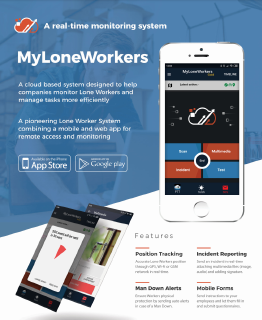
MyLoneWorkers is a cloud-based safety monitoring platform designed specifically for businesses with remote field operations. Combining a powerful web management dashboard with native Android and iOS mobile applications, it delivers a complete suite of safety monitoring systems for lone workers — from passive man-down detection to active SOS alerting, welfare checks, geofencing, and AI-powered reporting.
Every feature in MyLoneWorkers reflects the real conditions of remote field work. This is not a generic workforce management tool with safety monitoring added as an afterthought. It is a safety monitor system engineered for the environments and hazards that field-based industries actually face.
Test MyLoneWorkers for Free
Discover how MyLoneWorkers protects lone and field workers with man down alarms, real-time monitoring, and automated safety alerts. No installation or commitment required.
Core Safety Monitoring Features of MyLoneWorkers
Man Down Alert: Passive Safety Monitoring at Its Most Critical
The Man Down feature represents the most important passive layer of safety monitoring systems for lone workers. A sensor clip worn on the worker's uniform continuously detects movement. When the sensor identifies that a worker has collapsed, fallen, or become incapacitated, a Man Down notification is automatically dispatched to the Monitoring Center — triggering an immediate response without any action required from the worker.
This is what separates serious safety monitoring systems from basic check-in tools. In any scenario where a worker suffers a sudden medical event or loses consciousness, the gap between incident and response is eliminated by the passive safety monitoring layer. The system acts even when the worker cannot.
SOS Alert and Test Alert
For situations where a worker recognizes a threat and can act, the SOS button in the MyLoneWorkers safety monitor sends an immediate alarm to the Monitoring Center with precise GPS coordinates. Up to three additional contacts receive simultaneous SMS notifications, ensuring that the right people respond through multiple channels at the same time.
The Test Alert function allows workers to verify that every element of the safety monitoring setup — device, connectivity, location data, patrol configuration — is functioning correctly before a shift begins. It is a small but important feature that builds operational confidence and reduces the risk of technical failures at critical moments.
Welfare Check: Scheduled Safety Monitoring with Automatic Escalation
The Welfare Check feature automates the structured safety monitoring cycle that many businesses currently manage through manual phone calls or informal arrangements. Managers define check-in intervals based on the risk profile of each worker and each assignment. If a worker fails to complete their welfare check within the defined window, the safety monitoring platform immediately generates an alert and notifies managers via the web application and email.
The critical design principle is that silence is not treated as acceptable. Every missed check-in in the safety monitor system is treated as a potential emergency — not as an administrative gap to be noted and followed up when convenient.
External BLE Panic Button: Safety Monitoring Beyond the Smartphone
Some field environments make smartphone access genuinely impractical during an emergency — heavy protective gloves, confined spaces, fast-moving patrols, or industrial equipment that makes fine motor tasks difficult under pressure. MyLoneWorkers addresses this with an external Bluetooth Low Energy (BLE) panic button.
Workers carry the physical device as part of their standard equipment. A single press dispatches a real-time SOS through the safety monitoring system to the Monitoring Center. This hardware redundancy is a defining characteristic of safety monitoring systems that are designed for real field conditions rather than ideal scenarios.
Geofence Alerts: Continuous Passive Safety Monitoring
Geofencing adds a continuous, passive dimension to the safety monitoring framework. Managers configure virtual boundaries around job sites, restricted zones, hazardous areas, or permitted working regions. The safety monitor system generates an alert the moment a worker enters or exits a defined geofence — providing situational awareness that operates in parallel with active check-ins and alerting, without requiring any input from the worker.
For large sites, multi-location operations, or environments with specific access control requirements, geofencing is an essential component of comprehensive safety monitoring systems.
Real-Time Checkpoint Scanning
Using NFC tags, Beacons, QR codes, and virtual checkpoints placed at specific locations across work sites, workers log their presence and task completion in real time via the mobile application. Each scan sends timestamped GPS data to the web dashboard through a secure cloud server.
Workers can enrich each checkpoint scan with photos, voice notes, written notes, and signatures — creating a detailed, verifiable record of field activity that complements the safety monitoring data stream with operational context. This audit trail supports compliance reporting, quality assurance reviews, and client-facing documentation.
AI Reports: Intelligence Driven by Safety Monitoring Data
The AI Reports feature transforms the data generated by safety monitoring systems into immediately actionable management intelligence. Managers ask natural-language questions directly inside the MyLoneWorkers platform — "Show all incidents in the last 7 days", "Which workers triggered SOS alerts this month?", "List all missed welfare checks this week?" — and receive instant, structured answers.
For operations managers overseeing large or geographically dispersed workforces, AI-powered reporting turns the continuous output of the safety monitoring platform into decisions, not just data.
Additional Features That Strengthen the Safety Monitoring Ecosystem
MyLoneWorkers extends its safety monitoring systems with a suite of operational capabilities that integrate safety and efficiency in a single platform:
- Time & Attendance provides real-time tracking of working hours, shift check-ins and check-outs, and break times — directly integrated with the safety monitor infrastructure so that attendance data and safety data are managed in one place
- Asset Tracking allows managers to register and monitor physical assets — keys, equipment, devices — tracking custody chains, issue dates, and return schedules. Full accountability, without a separate system.
- SafePass extends the protection of the safety monitoring platform to VIPs, high-profile clients, and designated individuals through a dedicated mobile application — supporting executive protection operations and businesses with client-facing safety obligations.
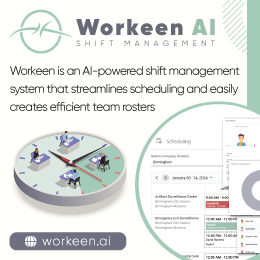
Optimize Your Scheduling with Workeen AI
Transform your workforce management with Workeen AI, the AI-powered shift management system designed to simplify scheduling for industries with round-the-clock operations. Effortlessly create efficient rosters, manage unexpected absences, and ensure fair work distribution with predictive insights and real-time updates. Boost productivity and compliance while keeping your team informed through instant communication tools.
Why MyLoneWorkers Stands Out Among Safety Monitoring Systems
In a market with multiple safety monitoring systems competing for business, MyLoneWorkers distinguishes itself through the depth, reliability, and operational integration of its platform:
- Multi-layered protection. Man Down detection, SOS alerting, welfare checks, physical panic button, and geofencing operate as interdependent layers — so no single failure point leaves a worker without coverage.
- Cloud-based deployment. No on-premise hardware, no complex installation, rapid setup, and unlimited global scalability.
- Built for real field conditions. From hardware integration for environments where phones are inaccessible, to multi-technology location tracking for areas with poor GPS coverage, MyLoneWorkers is engineered for the conditions where field workers actually operate.
- Compliance-ready by design. Automatic audit logging across all safety monitoring activity means compliance documentation is generated as a byproduct of normal operations — not as a separate administrative task.
- Operational and safety in one platform. Combining safety monitoring systems with scheduling, attendance, asset management, and AI reporting eliminates the inefficiency of managing separate tools.
Conclusion: Safety Monitoring Systems Are the Foundation of Field Operations Safety
For businesses with remote field operations, safety monitoring systems are not supplementary to a safety strategy — they are the strategy. In environments where workers operate alone, in isolation, and beyond direct supervision, the only reliable way to ensure that incidents are detected and responded to in time is through a purpose-built safety monitoring platform.
MyLoneWorkers delivers the most complete and field-proven safety monitoring solution available in 2026. From passive Man Down detection and automated welfare checks to SOS alerting, geofencing, and AI-powered reporting, it provides remote field operations with the protection, visibility, and compliance infrastructure they need.
Because in field operations, the right safety monitoring system does not just protect workers — it defines the standard of care your business lives by.
Discover MyLoneWorkers and request your free demo today.
About MyLoneWorkers
MyLoneWorkers innovative system reduces the risks and guarantees that every lone worker returns home safely after carrying out their tasks at work which is one of the most basic responsibilities for an employer. It is a real time lone worker monitoring system which skyrockets the efficiency of lone workers’ safety and the completion of their tasks offering them the ability to increase their productivity via technology.