What Does It Mean to Work Solo in Modern Field Operations?
Table of Contents
- Defining What It Means to Work Solo
- The Growth of Solo Work in Field Operations
- The Specific Risks of Working Solo
- The Employer's Obligations When Workers Work Solo
- MyLoneWorkers: The Platform Built for Employees Who Work Solo
- Core Features That Protect Workers Who Work Solo
- Operational Features That Support the Solo Worker Model
- What Best Practice Looks Like for Businesses with Solo Workers
- Conclusion: Work Solo Safely in 2026 with the Right Platform
The modern workforce is more dispersed than at any point in recent history. Across industries from utilities and construction to security, healthcare, and logistics, a significant and growing proportion of employees spend the majority of their working time away from colleagues, supervisors, and the structured environments of offices and depots. They work solo — alone in the field, on remote sites, in isolated facilities, during overnight shifts, and in conditions that carry risks that team-based workers rarely encounter.
To work solo in modern field operations is not simply to be physically alone. It is to operate in a state of reduced visibility, reduced accountability, and reduced protection — where the absence of a colleague nearby transforms every hazard, however minor it might seem in a team setting, into a potentially serious risk. It is also, for millions of workers worldwide, simply the nature of their job. Individual working is not an exception in field operations. It is often the norm.
In the UK and across the EU, duty of care obligations have been interpreted increasingly broadly to include workers in these roles. And globally, hotel groups — from independent properties to major international chains — are recognising that a hotel panic button system is not a luxury or a compliance checkbox. It is a fundamental protection for the people who keep their operations running.
Understanding what it means to work solo in 2026 — the risks it creates, the obligations it places on employers, and the technology that makes it manageable and safe — is essential for any business that relies on a dispersed field workforce. This article explores that question in depth and explains how MyLoneWorkers provides the most complete platform for protecting employees who work solo in demanding operational environments.
Defining What It Means to Work Solo
Work solo describes any working arrangement in which an employee performs their duties without direct supervision or a colleague immediately available to assist in an emergency. In field operations, this encompasses an enormous range of roles and scenarios:
A utility engineer inspecting infrastructure at a remote location. A security officer conducting overnight patrols of a large commercial facility. A healthcare worker visiting patients in the community. A construction worker completing tasks on a section of a large site with no other crew present. A field service technician carrying out repairs or installations alone at a customer premises. A delivery driver operating independently across a wide geographic area.
What unites all of these scenarios is that the worker is, in a meaningful sense, on their own. When they work solo, there is no colleague to witness an incident, no one to call for help on their behalf, and no one to provide immediate assistance if something goes wrong. The entire safety net that team working provides — mutual awareness, shared responsibility, immediate peer response — is absent.
Lone working — the formal term used in health and safety frameworks — is the regulatory and professional context within which work solo arrangements are assessed and managed. But the lived reality of individual working in modern field operations is broader and more nuanced than any single regulatory definition captures. It includes not only the isolated engineer on a remote site but also the security guard who is technically on a staffed premises but effectively alone for extended periods, and the field service worker whose nearest colleague is an hour's drive away.
The Growth of Solo Work in Field Operations
The trend toward work solo arrangements in field operations has accelerated over the past decade, driven by several converging forces.
 Cost efficiency. Deploying workers individually rather than in pairs reduces labour costs significantly. For businesses operating at scale across large geographic areas, the economics of individual working are compelling — provided the associated risks are managed adequately.
- Technology enablement. Smartphones, GPS tracking, cloud-based management platforms, and real-time communication tools have made it operationally feasible to manage workers who work solo across dispersed locations in ways that were simply impossible a decade ago. Technology has expanded the envelope of where and how lone working can be safely conducted.
- Service model evolution. Customer expectations for responsive, flexible field service delivery have pushed businesses toward smaller, faster deployment units rather than large teams. The worker who arrives alone, completes the task, and moves on to the next assignment is increasingly the standard model — not the exception.
- Labour market pressures. Skills shortages in several key field operations sectors have made it harder to staff team-based arrangements for every deployment. Solos work assignments have become a practical necessity in some industries, regardless of preference.
The result is a field operations landscape in which work solo is the default for a substantial portion of the workforce — and in which the safety and management infrastructure to support that model has struggled to keep pace with its growth.
The Specific Risks of Working Solo
To understand why work solo arrangements require dedicated safety infrastructure, it is necessary to be specific about the risks they create. Individual working does not simply mean being alone. It means being alone in conditions that may include:
Physical hazards with no immediate assistance available
Falls, equipment failures, exposure to hazardous materials, and electrical or mechanical incidents all carry a different risk profile when a worker is alone. In a team environment, a colleague can call for help, provide first aid, or at minimum confirm that an incident has occurred. When workers work solo, none of these responses are available.
Medical emergencies without witnesses
Sudden cardiac events, strokes, severe allergic reactions, and other acute medical episodes can render a worker unconscious or incapacitated within seconds. A worker who is part of a team is likely to receive intervention within minutes. A worker engaged in lone working may go undiscovered for hours.
Security and personal safety threats
Workers who work solo in public-facing roles, on sites accessible to the public, or in locations with elevated security risk face personal safety threats without any colleague present to deter, assist, or respond.
Delayed detection of all incident types
Even in scenarios that would not be considered high-risk in a team environment, individual working delays the detection of problems simply because no one is present to notice them. A minor injury, a vehicle breakdown, a tool malfunction that causes harm — all of these are responded to more slowly when the worker has no immediate contact with colleagues or supervisors.
Psychological and wellbeing dimensions
Workers who work solo for extended periods also face wellbeing challenges that are increasingly recognised as occupational hazards in their own right. Isolation, the absence of peer support, and the psychological weight of operating without a safety net contribute to fatigue, stress, and reduced alertness — all of which increase the likelihood of accidents.
The Employer's Obligations When Workers Work Solo
For businesses with employees who work solo, lone working is not simply an operational arrangement — it is a legal liability that requires systematic management.
In the UK, the Health and Safety at Work Act 1974 and the Management of Health and Safety at Work Regulations 1999 require employers to assess the specific risks of lone working and implement appropriate controls. The HSE's guidance on lone workers is explicit: employers must consider whether the work can be done safely by one person and what arrangements are needed to monitor and protect workers who work solo.
EU frameworks and OSHA standards in the United States carry equivalent obligations. In 2026, the expectation of regulators, courts, and insurers is that businesses with individual working arrangements have systematic, technology-supported monitoring in place — not informal check-in calls or passive hope that nothing will go wrong.
A lonely worker who suffers an avoidable incident in the absence of adequate protective measures represents both a human tragedy and a significant legal and commercial exposure for their employer. The question for businesses in 2026 is not whether to invest in work solo safety infrastructure. It is which platform delivers the most complete and reliable protection.
MyLoneWorkers: The Platform Built for Employees Who Work Solo
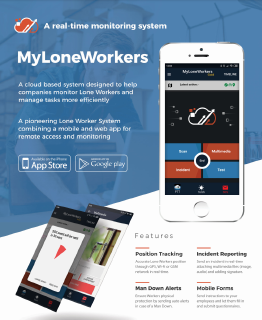
MyLoneWorkers is a comprehensive cloud-based workforce management and safety platform designed specifically for businesses whose employees work solo in field operations and remote environments. Combining a real-time web management dashboard with native Android and iOS mobile applications, it delivers end-to-end protection and operational visibility for workers engaged in lone working — anywhere in the world.
Every feature in MyLoneWorkers exists to solve a real problem that arises when employees work solo. It is not a generic workforce tool with safety features added as an afterthought. It is a platform engineered for the specific hazards and operational realities of individual working in demanding field environments.
Test MyLoneWorkers for Free
Discover how MyLoneWorkers protects lone and field workers with man down alarms, real-time monitoring, and automated safety alerts. No installation or commitment required.
Core Features That Protect Workers Who Work Solo
Man Down Alert: Passive Protection for Lone Working
The Man Down feature is the most critical passive safety layer for workers who work solo. A sensor clip worn on the worker's uniform continuously monitors movement and posture. When it detects that a worker has fallen, collapsed, or been incapacitated, an automatic Man Down notification is dispatched to the Monitoring Center — without any action required from the worker.
This passive detection is what distinguishes a genuine lone working safety platform from a basic check-in tool. When a worker engaged in solos work suffers a sudden medical event or is rendered unconscious, the platform responds independently — sending the alert the worker cannot send themselves.
Welfare Check: Structured Accountability for Individual Working
The Welfare Check feature automates the time-based safety monitoring cycle that is essential for workers who work solo. Managers define check-in intervals based on each worker's risk profile and assignment. If a worker misses a check-in, the platform immediately generates an alert and notifies managers via the web application and email.
For businesses managing lone working arrangements across multiple sites and time zones, automated welfare checks replace unreliable manual processes with a systematic, scalable accountability loop. Every worker who undertakes solos work is monitored continuously, regardless of location or shift time.
SOS Alert and External BLE Panic Button
When a worker recognises a developing threat, the SOS button in the MyLoneWorkers mobile application sends an immediate alarm to the Monitoring Center with precise GPS coordinates. Up to three contacts receive simultaneous SMS notifications — ensuring a multi-channel response that reaches the right people instantly.
For environments where accessing a smartphone is impractical — heavy protective gear, confined spaces, fast-paced security operations — the external Bluetooth Low Energy (BLE) panic button provides a physical one-press SOS that workers carry as part of their standard equipment. Together, the mobile SOS and the physical panic button create a dual-layer active alert system for workers who work solo in any condition.
Geofence Alerts: Location Awareness for Lone Working
Virtual geographic boundaries around job sites, restricted zones, and permitted working areas generate automatic alerts when workers enter or exit defined areas. For managers overseeing workers who work solo across large or complex sites, geofencing provides continuous passive situational awareness that complements active check-ins and alerting.
Real-Time Checkpoint Scanning
Using NFC tags, Beacons, QR codes, and virtual checkpoints placed at specific locations, workers log their presence and task completion in real time. Each scan sends timestamped GPS data to the web dashboard via a secure cloud server. Workers can attach photos, voice notes, written notes, and signatures to scanned checkpoints — building a verifiable operational record that supports compliance, quality assurance, and client reporting for every individual working assignment.
AI Reports: Intelligence for Managing Solo Work at Scale
The AI Reports feature allows managers to interrogate lone working data using natural-language questions — "Which workers missed welfare checks this week?", "Show all incidents in the last 30 days", "List all SOS alerts triggered this month?" Instant, structured answers turn platform data into proactive risk management for businesses managing large teams of workers who work solo across multiple locations.
Operational Features That Support the Solo Worker Model
MyLoneWorkers extends its safety infrastructure with operational tools that integrate directly with the realities of individual working:
- Time & Attendance provides real-time tracking of shift check-ins, check-outs, working hours, and breaks — eliminating the administrative overhead of managing attendance for a dispersed lone working workforce.
- Asset Tracking allows managers to monitor physical assets — keys, equipment, devices — tracking who holds each item, issue dates, and return schedules. For workers who work solo, asset accountability is both a security and an operational priority.
- SafePass extends the MyLoneWorkers protection model to VIPs and designated individuals through a dedicated mobile application — supporting security operations where protection of clients is as important as the safety of the workers themselves.
What Best Practice Looks Like for Businesses with Solo Workers
For businesses whose employees regularly work solo, best practice in 2026 is defined by four commitments:
- Systematic risk assessment. Every role, site, and shift pattern involving lone working must be formally assessed for the specific risks it creates. That assessment must be documented, reviewed regularly, and acted upon.
- Technology-supported monitoring. aInformal check-in arrangements are not adequate for individual working in high-risk environments. A purpose-built platform that automates welfare checks, detects emergencies passively, and provides real-time location visibility is the standard of care that regulators and courts expect to see.
- Clear escalation procedures. Every alert generated by the work solo safety platform must have a defined response procedure — who acts, how quickly, and what steps are followed. Technology generates the alerts; procedures determine what happens next.
- Worker involvement and transparency. Workers who work solo should understand what the monitoring system does, why it is in place, and how it protects them. A platform that workers trust and engage with consistently is a far more effective safety tool than one they perceive as surveillance.
Optimize Your Scheduling with Workeen AI
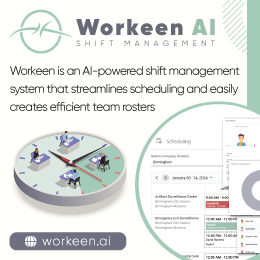
Transform your workforce management with Workeen AI, the AI-powered shift management system designed to simplify scheduling for industries with round-the-clock operations. Effortlessly create efficient rosters, manage unexpected absences, and ensure fair work distribution with predictive insights and real-time updates. Boost productivity and compliance while keeping your team informed through instant communication tools.
Conclusion: Work Solo Safely in 2026 with the Right Platform
To work solo in modern field operations is to accept a specific set of risks that team-based workers do not face. Those risks are manageable — with the right technology, the right procedures, and the right commitment from employers who take their duty of care seriously.
MyLoneWorkers provides the most complete platform for protecting workers who work solo in 2026. From passive Man Down detection and automated welfare checks to SOS alerting, geofencing, checkpoint scanning, and AI-powered reporting, it delivers the safety infrastructure that lone working and individual working genuinely require.
Because every worker who goes out alone deserves to know that someone has their back — no matter where the job takes them.
Explore MyLoneWorkers and request your free demo today.
About MyLoneWorkers
MyLoneWorkers innovative system reduces the risks and guarantees that every lone worker returns home safely after carrying out their tasks at work which is one of the most basic responsibilities for an employer. It is a real time lone worker monitoring system which skyrockets the efficiency of lone workers’ safety and the completion of their tasks offering them the ability to increase their productivity via technology.