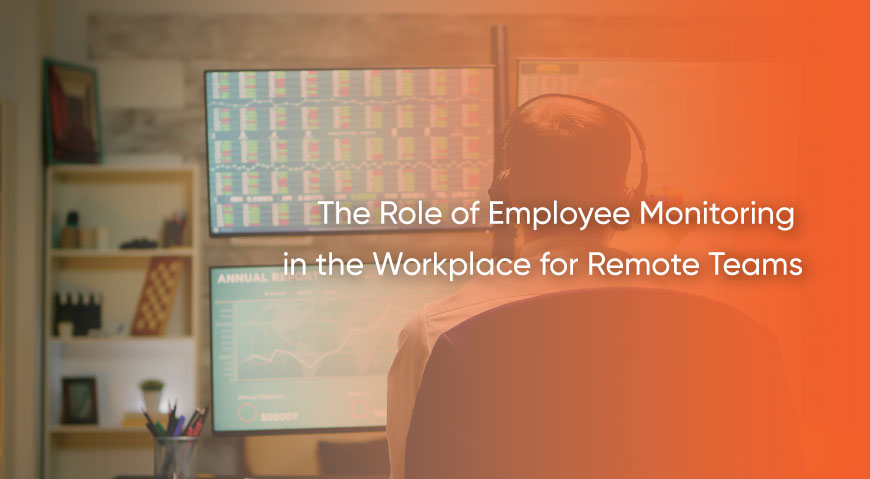
The Role of Employee Monitoring in the Workplace for Remote Teams
Table of Contents
- What Employee Monitoring in the Workplace Means for Remote Teams
- The Business Case for Employee Monitoring in the Workplace
- The Risks of Inadequate Employee Monitoring in the Workplace
- What Effective Employee Monitoring in the Workplace Must Deliver
- MyLoneWorkers: Employee Monitoring in the Workplace Built for Remote Teams
- Core Employee Monitoring Features of MyLoneWorkers
- Operational Features That Complete the Remote Worker App Ecosystem
- Why MyLoneWorkers Sets the Standard for Employee Monitoring in the Workplace
- Conclusion: Employee Monitoring in the Workplace Is How Remote Teams Stay Safe
The nature of work has changed profoundly. Across industries from security and utilities to construction, healthcare, and logistics, a significant portion of the workforce operates remotely — on job sites, in the field, during unsociable hours, and often without a colleague or supervisor in sight. For the businesses that employ these workers, the question of employee monitoring in the workplace has never been more relevant or more complex.
Done well, employee monitoring in the workplace is not surveillance for its own sake. It is a framework of visibility, accountability, and protection that keeps remote workers safe, helps managers respond fast when incidents occur, and gives businesses the compliance infrastructure they need to satisfy legal obligations. For remote teams in particular, a thoughtfully implemented remote worker app and safety monitoring platform transforms the way businesses protect and manage their most dispersed employees.
This article explores the evolving role of employee monitoring in the workplace for remote teams, why it matters, what it must deliver, and how MyLoneWorkers provides the most complete solution available in 2026.
What Employee Monitoring in the Workplace Means for Remote Teams
In an office environment, employee monitoring in the workplace has traditionally been associated with productivity tracking — logging hours, measuring output, reviewing digital activity. For remote field teams, the picture is fundamentally different. The primary purpose of employee monitoring in the workplace for workers in isolation is not performance management. It is safety.
When an engineer works alone on a remote utility site, when a security officer patrols a facility at 3am, when a healthcare worker visits a patient in an isolated location — the most important question a manager needs to answer is not "how productive is this person?" but "is this person safe right now, and if something goes wrong, will I know immediately?"
This is the central value proposition of employee monitoring in the workplace for remote teams: replacing the dangerous information vacuum that exists when workers operate without direct supervision with a continuous, real-time connection between the worker, the monitoring platform, and the management team.
A remote worker app combined with cloud-based safety monitoring infrastructure is how that connection is established and maintained in practice. It creates a digital presence for every remote worker — one that updates in real time, escalates automatically when something is wrong, and generates the audit trail that compliance requires.
The Business Case for Employee Monitoring in the Workplace
The argument for robust employee monitoring in the workplace for remote teams operates on three levels simultaneously: safety, legal compliance, and operational efficiency.
Safety
Remote workers are statistically more vulnerable to serious injury and fatality than their office-based counterparts. Without a colleague to witness an incident, call for help, or provide first aid, a survivable accident can become fatal simply due to delayed response. Employee monitoring in the workplace via a real-time remote worker app and safety monitoring platform closes that gap — ensuring that incidents are detected and responded to within minutes rather than hours.
Legal Compliance
In the UK, the Health and Safety at Work Act 1974 and the Management of Health and Safety at Work Regulations 1999 require employers to assess and control the specific risks of lone working. EU frameworks and OSHA standards in the United States carry equivalent obligations. Regulators in 2026 expect to see evidence of systematic employee monitoring in the workplace for remote teams — timestamped records, automated alerts, documented management responses. Businesses without this infrastructure face enforcement action, financial penalties, and unlimited civil liability if an avoidable incident occurs.
Operational Efficiency
Effective employee monitoring in the workplace is not only about safety. A well-designed remote worker app and safety monitoring platform also streamlines scheduling, attendance tracking, task management, and reporting — reducing administrative overhead, improving resource allocation, and giving managers a single source of truth for everything happening across their dispersed workforce.
The Risks of Inadequate Employee Monitoring in the Workplace
Before exploring what good employee monitoring in the workplace looks like, it is worth understanding what happens without it.
A field worker suffers a medical episode on a remote site at midday. Without a safety monitoring platform, no alert is generated. Their colleagues assume they are busy. It is not until the end of the shift — hours later — that anyone realizes something is wrong. The window for intervention closed long ago.
A security officer on a night patrol is assaulted. They cannot reach their phone. Without a remote worker app equipped with a physical panic device, there is no way to signal for help. The monitoring center has no indication that anything is wrong.
A utility technician misses two scheduled welfare check-ins. Without automated employee monitoring in the workplace, those misses are noted but not escalated immediately. By the time a manager follows up, the situation has deteriorated significantly.
Each of these scenarios represents a failure of employee monitoring in the workplace — and each is entirely preventable with the right platform in place.
What Effective Employee Monitoring in the Workplace Must Deliver
Not all employee monitoring in the workplace solutions provide the depth of protection that remote field teams require. When evaluating a remote worker app and safety monitoring platform, these are the essential capabilities:
 Real-time location tracking. Effective employee monitoring in the workplace requires continuous, accurate location data — combining GPS, Wi-Fi, and GSM triangulation to provide coverage indoors, outdoors, underground, and in areas with poor satellite coverage.
- Passive emergency detection. A safety monitoring platform that only responds when a worker actively raises an alarm has a critical gap. Man-down detection via wearable sensors must be part of any serious employee monitoring in the workplace solution — automatically triggering alerts when a worker is incapacitated and cannot act themselves.
- Active SOS alerting. Workers must be able to raise an alarm instantly from their remote worker app and, in environments where phone access is impractical, from a dedicated physical panic device.
- Welfare check automation. Scheduled check-ins with automatic escalation when workers fail to respond are a fundamental component of employee monitoring in the workplace for remote teams. The platform must treat silence as a warning signal, not a routine gap.
- Geofencing. Virtual boundaries around work sites, restricted zones, or permitted working areas allow safety monitoring to operate passively — alerting managers when workers enter or leave defined areas without any input from the worker.
- Compliance-grade audit logging. Every element of employee monitoring in the workplace must be automatically recorded — locations, check-ins, alerts, responses — creating the timestamped documentation that regulatory and legal processes require.
- Operational integration. The best employee monitoring in the workplace platforms integrate safety with scheduling, attendance, asset management, and reporting — giving managers a unified view of their remote workforce in a single remote worker app ecosystem.
Test MyLoneWorkers for Free
Discover how MyLoneWorkers protects lone and field workers with man down alarms, real-time monitoring, and automated safety alerts. No installation or commitment required.
MyLoneWorkers: Employee Monitoring in the Workplace Built for Remote Teams
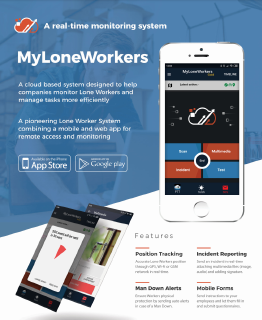
MyLoneWorkers is a cloud-based employee monitoring in the workplace platform designed specifically for businesses with field operations and remote blue-collar workforces. Combining a real-time web management dashboard with native Android and iOS mobile applications, it delivers comprehensive safety monitoring and operational oversight for workers operating in isolation — anywhere in the world.
MyLoneWorkers is not a generic workforce tool adapted for remote use. It is an employee monitoring in the workplace solution engineered from the ground up for the specific hazards and operational realities of lone and remote working.
Core Employee Monitoring Features of MyLoneWorkers
Man Down Alert: Passive Employee Monitoring in the Workplace
The Man Down feature delivers the most critical passive layer of employee monitoring in the workplace for remote teams. A sensor clip worn on the worker's uniform continuously monitors movement and posture. When a worker collapses, falls, or is rendered incapacitated, the sensor automatically dispatches a Man Down notification to the Monitoring Center — without any action required from the worker.
This automated detection is what separates a comprehensive employee monitoring in the workplace platform from a basic check-in tool. When a worker cannot call for help, the safety monitoring system calls for help on their behalf. For any business where sudden incapacitation is a realistic risk, this passive layer is non-negotiable.
SOS Alert and Test Alert
The SOS button within the MyLoneWorkers remote worker app sends an immediate alarm to the Monitoring Center with precise GPS coordinates the moment it is pressed. Up to three designated contacts receive simultaneous SMS notifications — ensuring a rapid, multi-channel response that reaches the right people regardless of availability.
The Test Alert function allows workers to verify that every element of the employee monitoring in the workplace setup is operational before a shift begins — device connectivity, location accuracy, and patrol configuration — reducing the risk of technical failures at critical moments.
Welfare Check: Structured Safety Monitoring for Remote Teams
The Welfare Check feature automates the time-based employee monitoring in the workplace cycle that many businesses currently manage through informal phone calls or manual rotas. Managers set check-in intervals based on each worker's risk level and assignment. When a worker misses a check-in, the safety monitoring platform immediately generates an alert and notifies managers via the web application and email.
The design principle is unambiguous: in an effective employee monitoring in the workplace system, no missed check-in is ever silently accepted. Every gap is treated as a potential emergency until confirmed otherwise.
External BLE Panic Button
For field environments where accessing a smartphone under pressure is impractical — confined spaces, heavy protective gear, fast-paced security patrols — the external BLE panic button extends employee monitoring in the workplace beyond the remote worker app. A single press dispatches a real-time SOS to the Monitoring Center, ensuring that the safety monitoring platform functions in the most demanding physical conditions.
Geofence Alerts
Managers configure virtual geographic boundaries around job sites, restricted areas, and permitted working zones. The employee monitoring in the workplace platform generates automatic alerts when a remote worker enters or exits a defined geofence — providing continuous, passive situational awareness that operates alongside active check-ins and alerting.
Real-Time Checkpoint Scanning
Using NFC tags, Beacons, QR codes, and virtual checkpoints placed at specific locations, workers log their presence and task completion in real time through the remote worker app. Each scan sends timestamped GPS data to the web dashboard via a secure cloud server. Workers can enrich scans with photos, voice notes, written notes, and signatures — building a verifiable operational audit trail that complements the core employee monitoring in the workplace data.
AI Reports
The AI Reports feature brings intelligent, natural-language reporting to employee monitoring in the workplace management. Managers type questions directly into the platform — "Show all incidents this week", "Which workers missed welfare checks today?", "List all SOS alerts in the last 30 days?" — and receive instant, structured answers. For managers overseeing large remote teams, AI-driven reporting turns safety monitoring data into proactive risk management.
Operational Features That Complete the Remote Worker App Ecosystem
MyLoneWorkers extends its employee monitoring in the workplace platform with operational tools that integrate safety and business management:
- Time & Attendance provides real-time tracking of working hours, shift check-ins and check-outs, and break times — integrated directly into the same remote worker app used for safety monitoring, eliminating the need for separate HR tools.
- Asset Tracking allows managers to register and monitor physical assets — keys, equipment, and devices — tracking custody, issue dates, and expected return schedules. Complete accountability without a separate system.
- SafePass extends the safety monitoring framework to VIPs and designated clients through a dedicated mobile application — supporting executive protection services, high-profile security operations, and businesses with client-facing safety obligations.
Optimize Your Scheduling with Workeen AI
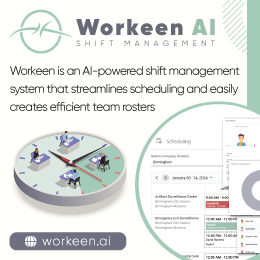
Transform your workforce management with Workeen AI, the AI-powered shift management system designed to simplify scheduling for industries with round-the-clock operations. Effortlessly create efficient rosters, manage unexpected absences, and ensure fair work distribution with predictive insights and real-time updates. Boost productivity and compliance while keeping your team informed through instant communication tools.
Why MyLoneWorkers Sets the Standard for Employee Monitoring in the Workplace
Among the employee monitoring in the workplace platforms available in 2026, MyLoneWorkers stands apart for remote field teams through a combination of depth, reliability, and integration:
- Layered protection. Man Down detection, SOS alerting, physical panic button, welfare checks, and geofencing operate together — no single failure point leaves a worker without coverage.
- Cloud-based deployment. No on-premise hardware, no complex installation, rapid setup, unlimited global scalability.
- Designed for real field conditions. From hardware redundancy for environments where phones are inaccessible, to multi-technology location tracking for poor-coverage areas, every feature reflects the realities of remote work.
- Unified platform. Safety monitoring, attendance tracking, asset management, and AI reporting in a single remote worker app ecosystem — one platform, one data source, zero fragmentation.
- Compliance built in. Automatic audit logging across all employee monitoring in the workplace activity means regulatory documentation is generated as a byproduct of normal operations.
Conclusion: Employee Monitoring in the Workplace Is How Remote Teams Stay Safe
For businesses with remote field teams in 2026, employee monitoring in the workplace is not an optional enhancement to a safety strategy. It is the safety strategy. When workers operate in isolation, without direct supervision and without a colleague to raise the alarm, the only reliable safeguard is a platform that maintains continuous, intelligent, automated oversight — and responds immediately when something goes wrong.
MyLoneWorkers delivers that platform. It combines the most important features of employee monitoring in the workplace — passive man-down detection, active SOS alerting, welfare check automation, geofencing, and real-time location tracking — with the operational tools that make the remote worker app an indispensable part of how field teams work every day.
Because for remote workers, effective employee monitoring in the workplace is not about watching — it is about protecting.
Explore MyLoneWorkers and request your free demo today.
About MyLoneWorkers
MyLoneWorkers innovative system reduces the risks and guarantees that every lone worker returns home safely after carrying out their tasks at work which is one of the most basic responsibilities for an employer. It is a real time lone worker monitoring system which skyrockets the efficiency of lone workers’ safety and the completion of their tasks offering them the ability to increase their productivity via technology.