How Man Down Alarm Devices Improve Emergency Response Times
Table of Contents
- What Are Man Down Alarm Devices?
- The Emergency Response Time Problem Without Man Down Alarm Devices
- How Man Down Alarm Devices Compress Emergency Response Times
- Key Features to Look for in Man Down Alarm Devices
- MyLoneWorkers: Man Down Alarm Devices Integrated into a Complete Safety Ecosystem
- The MyLoneWorkers Man Down Alarm Device: How It Works
- Complementary Features That Amplify the Value of Man Down Alarm Devices
- Why Man Down Alarm Devices Are Non-Negotiable for High-Risk Industries
- Conclusion: Man Down Alarm Devices Are the First Line of Defence
Every second counts in a workplace emergency. For employees working alone — on remote sites, in confined spaces, during night shifts, or in high-risk field environments — the difference between a fast response and a delayed one can determine whether an incident becomes a near-miss or a fatality. This is the core problem that man down alarm devices are designed to solve.
Unlike conventional safety tools that rely on a worker being able to consciously raise an alert, man down alarm devices detect emergencies passively and automatically. When a worker falls, collapses, or loses consciousness, the device triggers an alarm without requiring any action from the worker — dispatching an immediate notification to a monitoring center and compressing the response window from hours to minutes.
In 2026, man down alarm devices have become a standard expectation in high-risk industries. This article explains how they work, why they matter, how they improve emergency response times, and why the man down alarm device ecosystem within MyLoneWorkers represents the most complete solution available for lone worker protection.
What Are Man Down Alarm Devices?
Man down alarm devices are safety tools — hardware sensors, wearable devices, or integrated platform components — that automatically detect when a worker has fallen, collapsed, or become incapacitated. Unlike a standard panic button, which requires the worker to press it, man down alarm devices monitor the worker's movement, posture, or orientation continuously and trigger an alert without any deliberate action from the worker.
The triggering mechanism varies by device. Most man down alarm devices use accelerometers and gyroscopes to detect sudden changes in movement — a sharp impact consistent with a fall, followed by a prolonged period of inactivity. Some devices also detect tilt angle, identifying when a worker has been horizontal for longer than a defined threshold.
When the trigger condition is met, the man down alarm device sends an automatic notification — typically through a connected platform — to a monitoring center, a management dashboard, or both. The alarm worker notification includes the worker's identity and precise location, enabling the fastest possible emergency response.
This passive, automatic detection is what distinguishes man down alarm devices from other safety tools and makes them indispensable for lone worker protection. In any scenario where a worker is rendered unconscious, suffers a cardiac event, or is physically unable to press a button, man down alarm devices act as the worker's voice — sending the work alert that the worker cannot send themselves.
The Emergency Response Time Problem Without Man Down Alarm Devices
To understand why man down alarm devices matter so profoundly, it helps to map what happens in their absence.
A construction worker suffers a fall at a remote section of a large site. No colleague witnesses it. The worker is unconscious and cannot reach their phone. Without man down alarm devices, the next event in the timeline is someone noticing the worker is absent — typically at break time or end of shift. In many documented cases, that gap is two to four hours. For serious head injuries or internal bleeding, that window is the difference between survival and death.
A utility engineer working alone in a below-ground access chamber loses consciousness due to oxygen depletion. There is no alarm worker notification. The monitoring center has no indication of a problem until a scheduled welfare check goes unanswered — by which point precious minutes have already been lost.
A security officer on a night patrol has a cardiac event. The last work alert from their device was a routine check-in 45 minutes earlier. Without man down alarm devices, the next trigger for concern is a missed check-in — which may not escalate to emergency response for another 15 to 30 minutes.
In each scenario, the absence of man down alarm devices creates a dangerous lag — a period during which the worker is in distress, help is needed, and nobody knows. The faster that gap is closed, the better the outcome. Man down alarm devices close it at the moment of incident, not minutes or hours later.
How Man Down Alarm Devices Compress Emergency Response Times
The mechanism by which man down alarm devices improve response times is straightforward but transformative:
Step 1 — Automatic detection.
The man down alarm device sensor detects the trigger condition — a fall, prolonged horizontal position, or sudden impact — within seconds of the incident occurring.
Step 2 — Immediate alert dispatch.
The device transmits an automatic alarm worker notification to the connected platform, including the worker's identity, precise GPS location, and timestamp. This happens without any action from the worker.
Step 3 — Monitoring center notification.
The work alert reaches the monitoring center and management dashboard simultaneously — often within 30 seconds of the incident. The monitoring team is alerted before they would have had any other reason to check on the worker.
Step 4 — Emergency response initiated.
With location data in hand and the nature of the incident clear, the monitoring center can dispatch emergency services or a response team immediately — without the delay of searching for the worker's last known location or attempting unanswered calls.
The cumulative effect is a dramatic compression of the response timeline. Where a lone worker incident without man down alarm devices might go undetected for 45 minutes to several hours, the same incident with man down alarm devices in place generates a response within minutes of the event occurring.
In medical emergencies — particularly cardiac events, strokes, and head trauma — those minutes are clinically significant. The survival rate for out-of-hospital cardiac arrest drops by approximately 10% for every minute without intervention. Man down alarm devices are not just a compliance tool. They are a life-saving technology.
Key Features to Look for in Man Down Alarm Devices
Not all man down alarm devices offer the same level of protection. When evaluating options for a lone worker safety programme, these are the criteria that separate serious platforms from superficial ones:
 Detection sensitivity and specificity. The man down alarm device must be sensitive enough to detect genuine falls and incapacitation reliably, but specific enough to avoid false positives that lead to unnecessary emergency responses. The best devices use multi-axis sensor data and configurable detection thresholds to achieve both.
- Pre-alert countdown. Many man down alarm devices include a brief countdown period — typically 15 to 30 seconds — between detection and alert dispatch. This allows a worker who has been detected erroneously to cancel the alarm worker notification before it is sent. This countdown must be short enough not to delay genuine emergency response, but long enough to reduce false alerts.
- Automatic location data. Every man down alarm device alert must include precise location information. A work alert that notifies the monitoring center without telling them where the worker is provides no actionable intelligence. Multi-technology location tracking — GPS combined with Wi-Fi and GSM — ensures coverage in environments where satellite positioning alone is unreliable.
- Connectivity resilience. Man down alarm devices deployed in remote locations must be able to transmit alerts even in areas of poor mobile coverage. Evaluate whether the device uses multiple connectivity options — cellular, Wi-Fi, Bluetooth relay — to ensure that alerts get through.
- Integration with a broader safety platform. Man down alarm devices are most effective when they operate as part of a comprehensive lone worker safety ecosystem — one that also includes SOS alerting, welfare checks, geofencing, and real-time monitoring. A standalone man down alarm device without platform integration limits the quality of the response it enables.
- Comfort and wearability. A man down alarm device that workers find uncomfortable or intrusive will not be worn consistently. The best devices are compact, lightweight, and designed to attach easily to a uniform or belt without restricting movement.
Test MyLoneWorkers for Free
Discover how MyLoneWorkers protects lone and field workers with man down alarms, real-time monitoring, and automated safety alerts. No installation or commitment required.
MyLoneWorkers: Man Down Alarm Devices Integrated into a Complete Safety Ecosystem
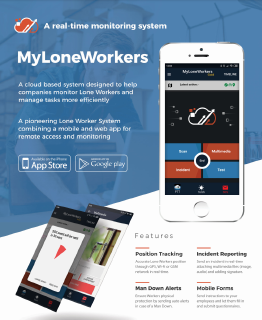
MyLoneWorkers delivers man down alarm devices as a fully integrated component of a cloud-based lone worker safety platform — combining wearable sensor hardware with a real-time monitoring dashboard, native Android and iOS mobile applications, and a suite of complementary safety features.
The result is not just a man down alarm device in isolation. It is an end-to-end alarm worker and response system that compresses emergency response times across every scenario lone workers face.
The MyLoneWorkers Man Down Alarm Device: How It Works
The MyLoneWorkers Man Down feature uses a sensor clip worn on the worker's uniform. The sensor continuously monitors movement and posture in real time. When it detects that a worker has fallen, collapsed, or remained motionless in a position consistent with incapacitation, it automatically triggers a Man Down notification through the MyLoneWorkers cloud platform.
The alarm worker notification is dispatched to the Monitoring Center web dashboard and simultaneously to designated managers — with the worker's identity, precise GPS coordinates, and the timestamp of the incident. No action from the worker is required at any point. The man down alarm device operates entirely independently of the worker's ability to respond.
The alarm worker notification is dispatched to the Monitoring Center web dashboard and simultaneously to designated managers — with the worker's identity, precise GPS coordinates, and the timestamp of the incident. No action from the worker is required at any point. The man down alarm device operates entirely independently of the worker's ability to respond.
Complementary Features That Amplify the Value of Man Down Alarm Devices
Man down alarm devices achieve their maximum protective value when they operate within a broader safety ecosystem. MyLoneWorkers provides every complementary layer needed to make the man down alarm device response as fast and effective as possible.
SOS Alert and Test Alert
When a worker can act — recognizing a developing threat before it escalates — the SOS button in the MyLoneWorkers remote worker app sends an immediate work alert to the Monitoring Center with precise GPS data. Up to three designated contacts receive simultaneous SMS notifications, creating a multi-channel response alongside the platform alert.
The Test Alert function lets workers verify that the full man down alarm device setup and connectivity are functioning correctly before a shift begins — building confidence and reducing the risk of equipment failures at critical moments.
External BLE Panic Button
For environments where accessing a smartphone under pressure is impractical — heavy protective gear, confined spaces, fast-moving patrols — the external Bluetooth Low Energy panic button provides a physical alarm worker trigger that workers carry alongside the man down alarm device. A single press dispatches a real-time SOS to the Monitoring Center, providing active alerting capability in any environment.
Together, the man down alarm device sensor and the BLE panic button create a dual-layer alert system: passive detection for when a worker cannot act, and instant physical activation for when they can.
Welfare Check
The Welfare Check feature adds a time-based work alert layer to the man down alarm device ecosystem. Managers set check-in intervals based on each worker's risk profile. If a worker misses a check-in, the platform immediately generates an alert and notifies managers via the web application and email — providing a safety net for scenarios where the man down alarm device sensor has not triggered but the worker's lack of contact is itself a warning signal.
Geofence Alerts
Virtual geographic boundaries around job sites and restricted zones generate automatic alerts when workers enter or leave defined areas — adding a passive situational awareness layer that complements the man down alarm device monitoring without requiring any input from the worker.
Real-Time Checkpoint Scanning
Workers log presence and activity in real time via NFC tags, Beacons, QR codes, and virtual checkpoints — each scan sending timestamped GPS data to the web dashboard. This creates a continuous operational record that provides important context for the alarm worker response when a man down alarm device alert is triggered, helping managers understand where the worker was and what they were doing at the time of the incident.
AI Reports
The AI Reports feature allows managers to interrogate the full history of man down alarm device activations, work alert events, and safety incidents using natural-language questions — "How many Man Down alerts occurred last month?", "Which sites generated the most SOS alerts this quarter?" Instant, structured answers turn safety data into proactive risk management intelligence.
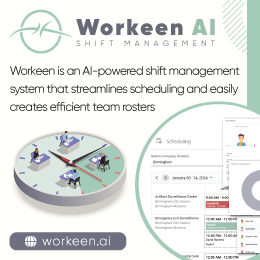
Optimize Your Scheduling with Workeen AI
Transform your workforce management with Workeen AI, the AI-powered shift management system designed to simplify scheduling for industries with round-the-clock operations. Effortlessly create efficient rosters, manage unexpected absences, and ensure fair work distribution with predictive insights and real-time updates. Boost productivity and compliance while keeping your team informed through instant communication tools.
Why Man Down Alarm Devices Are Non-Negotiable for High-Risk Industries
Across the industries where lone working is most common — construction, utilities, security, healthcare, oil and gas, logistics — the risk of sudden incapacitation is not a theoretical possibility. It is a documented, recurring reality. Falls, medical episodes, exposure to hazardous atmospheres, and physical assault are all scenarios where a worker may be rendered unable to call for help in an instant.
For businesses in these industries, man down alarm devices are the only technology that addresses this scenario directly. They remove the dependency on the worker being able to act, and replace it with automatic, immediate detection and notification — compressing the emergency response timeline at its most critical point.
Man down alarm devices, integrated within the MyLoneWorkers alarm worker platform, deliver that protection reliably, at scale, and as part of a comprehensive safety ecosystem that covers every dimension of lone worker risk.
Conclusion: Man Down Alarm Devices Are the First Line of Defence
When a worker falls alone in a remote location, the most important factor in determining the outcome is not the severity of the injury — it is how quickly help arrives. Man down alarm devices are the technology that makes fast response possible, by detecting the incident automatically and dispatching the work alert the moment it occurs.
MyLoneWorkers provides the most complete man down alarm device and lone worker safety ecosystem available in 2026 — combining passive sensor detection, active SOS alerting, welfare check automation, and AI-powered reporting in a single cloud-based platform.
Because when a worker goes down alone, every second of response time matters — and man down alarm devices are what save it.
Explore MyLoneWorkers and request your free demo today.
About MyLoneWorkers
MyLoneWorkers innovative system reduces the risks and guarantees that every lone worker returns home safely after carrying out their tasks at work which is one of the most basic responsibilities for an employer. It is a real time lone worker monitoring system which skyrockets the efficiency of lone workers’ safety and the completion of their tasks offering them the ability to increase their productivity via technology.