Manalone Safety Explained: Protecting Employees Who Work Alone
Table of Contents
- What Does Manalone Mean?
- Who Works in the Manalone Condition?
- The Specific Risks of the Manalone Condition
- Legal Obligations for Manalone Safety
- MyLoneWorkers: The Complete Manalone Safety Platform
- Core Features for Manalone Safety
- Additional Features That Complete the Manalone Safety Ecosystem
- Building a Complete Manalone Safety Programme
- Conclusion: Manalone Safety Is a Systematic Commitment
In the field of lone worker safety, the term manalone has become increasingly recognised as shorthand for a specific and serious operational challenge: the condition of an employee who is working without the immediate presence of a colleague, supervisor, or any person who could assist them in an emergency.
Whether the word is used as a technical term, an industry reference, or simply a descriptor for the reality millions of workers face every day, manalone captures something essential — the isolation that defines lone working and the heightened risk that isolation creates.
Understanding manalone safety — what it means, why it matters, and how to address it systematically — is essential for any business with employees who work alone in field environments. This article explains the manalone concept in depth, examines the risks and obligations it creates, and shows how MyLoneWorkers provides the most complete platform for safety working alone in 2026.
What Does Manalone Mean?
Manalone refers to the state of working in isolation — a condition in which an employee performs their duties without a colleague present who could witness an incident, provide immediate assistance, or raise an alarm on their behalf. The manalone condition is not defined by geographic remoteness alone. It applies equally to a security officer patrolling an empty building in a city centre, a maintenance engineer working alone in a plant room on an industrial estate, and a utility technician at a remote infrastructure installation.
What makes manalone a safety-critical condition is the compounding effect of isolation on risk. Every hazard that exists in a team working environment — physical, medical, environmental, or security-related — carries a different and more dangerous profile when a worker is alone. There is no one to call an ambulance, no one to provide first aid, no one to notice that something has gone wrong. The protective effect of team presence is entirely absent.
Safety working alone is therefore a discipline in its own right. It requires specific risk assessment, specific monitoring infrastructure, and specific emergency response protocols that go beyond standard workplace safety measures. For businesses whose workers regularly operate in the manalone condition, it requires a dedicated platform that maintains continuous oversight and responds automatically when the protective gap of isolation becomes a danger.
Who Works in the Manalone Condition?
The manalone condition is far more prevalent than most people outside high-risk industries realise. A broad and growing range of roles regularly place workers in circumstances where safety working alone is the primary concern:
 Security personnel — officers patrolling facilities, monitoring access points, or conducting rounds of large properties during overnight hours, often with no colleague within immediate reach.
- Field service engineers — technicians carrying out installations, inspections, repairs, or maintenance at customer premises, remote infrastructure sites, or locations where they are the sole worker present.
- Healthcare and social care workers — community nurses, social workers, and domiciliary care staff visiting patients and clients alone in private homes and community settings.
- Construction and utilities workers — individuals working on sections of large sites, in confined spaces, or at remote infrastructure locations where team deployment is impractical.
- Delivery and transport workers — drivers and couriers operating independently across wide geographic areas, often in early morning
- Hospitality and cleaning staff — housekeepers, maintenance personnel, and cleaning teams working alone in hotel rooms, office buildings, and public facilities during off-peak hours.
In each of these roles, the manalone condition is not an exceptional circumstance. It is the everyday reality of how the work is done. Safety working alone is therefore not a niche concern — it is a mainstream operational challenge affecting millions of workers across virtually every industry sector.
The Specific Risks of the Manalone Condition
The risks associated with the manalone condition fall into several distinct categories, each of which requires specific protective measures within a comprehensive safety working alone framework:
- Physical hazards. Falls, equipment failures, electrical incidents, and exposure to hazardous materials all carry an elevated risk profile in the manalone condition. In a team environment, a colleague can call for help and provide immediate first aid. In the manalone condition, the worker must rely entirely on external monitoring systems to detect the incident and initiate a response.
- Medical emergencies. Sudden cardiac events, strokes, severe allergic reactions, and other acute medical episodes can render a worker unconscious within seconds. The survival outcomes for out-of-hospital cardiac arrest depend critically on the speed of response. In the manalone condition, without a dedicated safety working alone monitoring platform, that response may be delayed by hours.
- Security and personal safety threats. Workers in the manalone condition face personal safety risks — particularly in roles that involve contact with the public, access to occupied spaces, or work in locations with elevated security risk. Without a means to raise an immediate alarm and have it responded to instantly, these threats are significantly more dangerous.
- Delayed incident detection. Even incidents that would be minor in a team environment become more serious in the manalone condition simply because detection is delayed. A twisted ankle, a tool malfunction, a vehicle breakdown — all of these become more consequential when no one is present to notice and respond.
- Psychological and fatigue risks. Extended periods of manalone working are associated with elevated fatigue, reduced alertness, and psychological stress — all of which increase the likelihood of accidents and reduce the worker's capacity to respond effectively when an incident occurs.
Legal Obligations for Manalone Safety
For businesses with workers in the manalone condition, safety working alone is not only a moral imperative — it is a legal obligation that is clearly defined and actively enforced.
In the UK, the Health and Safety at Work Act 1974 and the Management of Health and Safety at Work Regulations 1999 require employers to assess the specific risks of lone working and implement appropriate controls. The HSE's guidance on lone workers is explicit: employers must decide whether the work can be done safely by one person and what measures are needed to protect workers in the manalone condition.
EU member states carry equivalent frameworks under their national implementations of European health and safety directives. In the United States, OSHA standards impose comparable obligations on employers across high-risk sectors.
In 2026, the regulatory expectation is clear: businesses with workers in the manalone condition must have systematic, technology-supported safety working alone monitoring in place. Informal arrangements, periodic phone calls, and passive hope that nothing will go wrong do not constitute adequate protective measures. The evidence trail that regulators and courts expect to see includes timestamped records of monitoring activity, automated alert logs, and documented management responses to every welfare check failure and emergency event.
MyLoneWorkers: The Complete Manalone Safety Platform
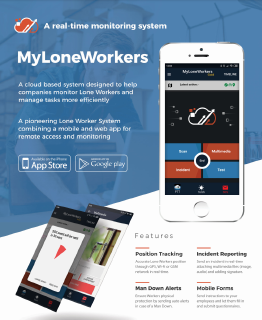
MyLoneWorkers is a cloud-based lone worker safety and workforce management platform designed specifically for businesses whose employees operate in the manalone condition. Combining a real-time web management dashboard with native Android and iOS mobile applications, it delivers comprehensive safety working alone infrastructure — from passive man-down detection and automated welfare checks to SOS alerting, geofencing, and AI-powered reporting — in a single integrated solution.
Every feature in MyLoneWorkers exists to solve a specific problem created by the manalone condition. It is not a generic workforce management tool adapted for lone worker use. It is a platform built from the ground up around the hazards, operational realities, and legal obligations that safety working alone imposes on businesses and their workers.
Test MyLoneWorkers for Free
Discover how MyLoneWorkers protects lone and field workers with man down alarms, real-time monitoring, and automated safety alerts. No installation or commitment required.
Core Features for Manalone Safety
Man Down Alert: Passive Manalone Protection
The Man Down feature is the most critical passive safety layer in the MyLoneWorkers manalone protection platform. A sensor clip worn on the worker's uniform continuously monitors movement and posture. When it detects that a worker has fallen, collapsed, or been incapacitated, an automatic Man Down notification is dispatched to the Monitoring Center — without any action required from the worker.
This passive, hardware-driven detection is the defining capability for manalone safety. When a lone worker suffers a sudden medical event or is physically unable to act, the Man Down sensor acts on their behalf — initiating the emergency response chain at the moment the incident occurs, not when someone eventually notices the worker is overdue.
For businesses whose workers regularly operate in the manalone condition, Man Down detection is not an optional enhancement to a safety working alone programme. It is the feature that makes the difference between an incident that is responded to in time and one that is not.
Welfare Check: Structured Manalone Monitoring
The Welfare Check feature automates the time-based safety assessment cycle that is essential for structured manalone monitoring. Managers define check-in intervals based on each worker's role, assignment, and risk profile. If a worker fails to complete their check-in within the defined window, the platform immediately generates an alert and notifies managers via the web application and email.
The fundamental design principle of the Welfare Check is that silence is never acceptable in manalone safety. Every missed check-in is treated as a potential emergency signal and escalated immediately — removing the dependency on human memory, shift availability, or the assumption that a lack of response means everything is fine.
For businesses managing large numbers of workers in the manalone condition across multiple sites and time zones, automated welfare checks replace unreliable manual processes with a systematic, always-on accountability loop.
SOS Alert and External BLE Panic Button
When a worker in the manalone condition recognises a developing threat and can act, the SOS button in the MyLoneWorkers mobile application dispatches an immediate alarm to the Monitoring Center with precise GPS coordinates. Up to three designated contacts receive simultaneous SMS notifications — ensuring a rapid, multi-channel response.
For environments where smartphone access is impractical — heavy protective equipment, confined spaces, fast-moving security operations — the external Bluetooth Low Energy (BLE) panic button provides a physical one-press SOS that workers carry alongside their phone. Together, the mobile SOS and the physical panic button create a dual-layer active alerting system that ensures workers in the manalone condition always have a means to raise an alarm, regardless of their circumstances.
Geofence Alerts: Boundary Monitoring for Manalone Workers
The geofencing feature allows managers to configure virtual geographic boundaries around job sites, restricted zones, and permitted working areas. The MyLoneWorkers safety working alone platform generates automatic alerts when a worker in the manalone condition enters or exits a defined geofence — providing a continuous, passive situational awareness layer that operates independently of active check-ins and SOS events.
For large sites, multi-location operations, and environments with specific access control requirements, geofencing adds an important dimension to the overall manalone safety architecture.
Real-Time Checkpoint Scanning
Using NFC tags, Beacons, QR codes, and virtual checkpoints placed at specific locations, workers log their presence and task completion in real time through the MyLoneWorkers mobile application. Each scan sends timestamped GPS data to the web dashboard via a secure cloud server. Workers can attach photos, voice notes, written notes, and signatures to scanned checkpoints — creating a verifiable operational record that supports compliance reporting, quality assurance, and client documentation for every manalone assignment.
This checkpoint data also provides important operational context for emergency responses: when a Man Down alert is triggered, the monitoring center can see the worker's most recent checkpoint scan, giving responders a precise last known location and a record of what the worker was doing at the time.
AI Reports: Intelligence for Manalone Safety Management
The AI Reports feature allows managers to interrogate manalone safety data using natural-language questions — "Show all missed welfare checks this week", "Which sites generated the most Man Down alerts this month?", "List all SOS events in the last 30 days?" Instant, structured answers surface patterns and anomalies that would otherwise remain hidden in raw data.
For safety working alone programme managers overseeing large dispersed workforces, AI-powered reporting transforms monitoring data into proactive risk management — identifying problem areas, recurring incidents, and high-risk patterns before they result in serious harm.
Additional Features That Complete the Manalone Safety Ecosystem
MyLoneWorkers extends its core manalone safety capabilities with operational features that integrate safety and business management:
- Time & Attendance provides real-time tracking of shift check-ins, check-outs, working hours, and breaks — fully integrated with the safety working alone monitoring infrastructure in a single platform.
- Asset Tracking allows managers to register and monitor physical assets — keys, equipment, devices — tracking custody, issue dates, and return schedules. For workers in the manalone condition, asset accountability is both a security and an operational requirement.
- SafePass extends the MyLoneWorkers protection model to VIPs and designated clients through a dedicated mobile application — supporting security operations where protecting clients is as important as protecting the workers assigned to them.
Building a Complete Manalone Safety Programme
Technology is the foundation of effective manalone safety, but it does not operate in isolation. The most effective safety working alone programmes combine the automated capabilities of the MyLoneWorkers platform with four complementary elements:
- Systematic risk assessment. Every role, site, and shift pattern involving the manalone condition must be formally assessed for the specific risks it creates. That assessment must be documented, reviewed regularly, and acted upon.
- Clear escalation procedures. Every alert generated by the manalone safety platform must have a defined response procedure — who acts, how fast, and what steps are followed. Technology generates the alerts; procedures determine the response.
- Worker engagement and transparency. Workers in the manalone condition should understand what the monitoring system does, why it is in place, and how it protects them. A safety working alone platform that workers trust and use consistently provides far better protection than one they resist or work around.
- Management commitment. Consistent, prompt response to every welfare check alert and emergency event reinforces the message that manalone safety is taken seriously at every level of the organisation — and that the monitoring system is not performative but genuinely protective.
Optimize Your Scheduling with Workeen AI
Transform your workforce management with Workeen AI, the AI-powered shift management system designed to simplify scheduling for industries with round-the-clock operations. Effortlessly create efficient rosters, manage unexpected absences, and ensure fair work distribution with predictive insights and real-time updates. Boost productivity and compliance while keeping your team informed through instant communication tools.
Conclusion: Manalone Safety Is a Systematic Commitment
The manalone condition is not going away. For millions of workers across high-risk industries, working without a colleague present is the daily reality of their role. For the businesses that employ them, providing adequate safety working alone infrastructure is a legal obligation, a moral duty, and in 2026, a baseline expectation of responsible operations.
MyLoneWorkers delivers the most complete manalone safety platform available — combining passive Man Down detection, automated welfare checks, SOS alerting, physical panic button hardware, geofencing, real-time checkpoint scanning, and AI-powered reporting in a single cloud-based solution.
Because every worker in the manalone condition deserves a safety platform that is as committed to protecting them as they are to doing their job.
Explore MyLoneWorkers and request your free demo today.
About MyLoneWorkers
MyLoneWorkers innovative system reduces the risks and guarantees that every lone worker returns home safely after carrying out their tasks at work which is one of the most basic responsibilities for an employer. It is a real time lone worker monitoring system which skyrockets the efficiency of lone workers’ safety and the completion of their tasks offering them the ability to increase their productivity via technology.