
The True Cost of Workplace Accidents: How One Work Injury Can Impact Your Entire Operation
Table of Contents
- Workplace Accidents: More Than a Safety Statistic
- The Direct Financial Cost of a Work Injury
- The Measurable Cost of Workplace Accidents
- The Economic Impact of Workplace Accidents in Europe, the UK, and Globally
- The True Cost of Workplace Accidents for Lone Workers
- The Hidden Costs of Workplace Injuries
- The Human Cost: The Impact on Morale and Culture
- Why Workplace Accidents Still Happen
- The Ripple Effect of One Workplace Injury
- From Reactive to Proactive: The Modern Approach to Workplace Accident Prevention
- What Is MyLoneWorkers?
- How MyLoneWorkers Reduces Workplace Accidents
- The ROI of Preventing a Single Workplace Accident
- Building a Safer Operation: A Strategic Framework
- Beyond Compliance: Creating a Culture That Prevents Workplace Injuries
- Frequently Asked Questions About Workplace Accidents
- The True Cost of Workplace Accidents: Final Thoughts
Workplace accidents are often discussed in terms of compliance, safety protocols, and prevention strategies. But what many organizations underestimate is the true cost of workplace accidents. A single work injury does not just affect one employee — it can disrupt productivity, increase operational costs, damage morale, and expose a company to serious legal and reputational risk.
As a cluster article supporting our pillar post, "Top Lone Working Hazards and How to Prevent Workplace Accidents" this guide explores the broader operational impact of workplace accidents and how businesses can protect their people — and their bottom line — through proactive safety management and smart technology.
Workplace Accidents: More Than a Safety Statistic
A workplace accident is any unplanned incident that results in injury, illness, or damage during work activities. For companies managing remote teams, field services, construction crews, hospitality staff, or security officers, the risk of a work accident is significantly higher due to isolation, environmental hazards, and limited supervision.
These risks are explored in more detail in our guide to common lone working hazards and how they contribute to workplace accidents, where we break down the most frequent dangers facing isolated employees.
Common examples include:
 Slips, trips, and falls
- Equipment-related incidents
- Vehicle collisions
- Assaults or violent incidents
- Medical emergencies while working alone
Each injury at work carries consequences far beyond the immediate medical response.
The Direct Financial Cost of a Work Injury
The financial cost of workplace accidents extends far beyond medical bills. Direct expenses such as treatment costs, workers’ compensation claims, and legal consultations are only part of the equation. Insurance premiums often rise following repeated workplace injuries, creating long-term financial strain.
Yet indirect costs are frequently even higher. Lost productivity, overtime payments for replacement staff, recruitment and training expenses, and management time dedicated to incident investigation all contribute to the real price of a work injury.
Consider the administrative burden alone. Every injury at work requires documentation, compliance reporting, internal reviews, and sometimes external audits. Leadership teams must redirect focus from strategic growth initiatives to damage control. Over time, recurring workplace accidents can erode profitability in ways that are difficult to immediately measure but deeply felt in operational performance.
The Measurable Cost of Workplace Accidents
Beyond operational disruption, the financial impact of workplace accidents is well documented. According to the U.S. National Safety Council (NSC), the average cost of a medically consulted work injury exceeds $40,000 per case, while the total annual cost of workplace injuries in the United States alone surpasses $160 billion when accounting for wage and productivity losses, medical expenses, and administrative costs.
These figures do not include indirect costs such as overtime coverage, training replacement workers, reduced productivity, reputational damage, or increased insurance premiums — all of which can multiply the true cost of a workplace injury.
For organizations managing lone workers and field operations, the risk exposure can be even greater. Studies consistently show that delayed response times in isolated environments increase the severity of injury at work incidents, leading to higher claim costs and longer recovery periods.
When viewed through this financial lens, preventing even a single serious work accident can protect tens of thousands of dollars — and potentially far more — in avoidable operational losses.
The Economic Impact of Workplace Accidents in Europe, the UK, and Globally
Understanding the scale of workplace accidents worldwide highlights why proactive prevention is not just good practice — it’s a business imperative. In the European Union, there were nearly 3 million non-fatal work accidents in 2022, resulting in over 3,000 fatal work-related deaths recorded that year alone, underscoring the continued prevalence of injury at work across industries.
In the UK context, recent estimates indicate that hundreds of thousands of workers are injured at work each year, with some employment surveys reporting around 600,000 non-fatal injuries annually and dozens of fatal injuries — figures that result in millions of working days lost and substantial economic burden.
Economically, workplace accidents and work-related illnesses carry a very real cost to European economies. According to estimates from European and international safety agencies, the combined cost of workplace accidents and occupational diseases across Europe has been valued at hundreds of billions of euros, representing a significant share of regional GDP.
Looking further afield, the International Labour Organization (ILO) reports that globally there are hundreds of millions of work-related injuries each year, and work accidents and occupational diseases together contribute to millions of deaths annually, with economic losses equating to about 4 % of global GDP.
For field service industries in particular — where employees often work alone, across multiple sites, and in variable environments — the risk of injury at work compounds operational and human costs. These sectors typically see higher incidences of slips, falls, equipment-related incidents, and other workplace injuries that contribute directly to lost productivity, increased insurance claims, and workforce disruption.
Incorporating these data points into safety planning — and investing in tools that reduce the likelihood of workplace accidents — helps quantify the value of prevention and supports stronger decision-making for organizations that cannot afford the consequences of a serious work injury.
The True Cost of Workplace Accidents for Lone Workers
When it comes to workplace accidents, lone workers often face greater risk and higher cost consequences than team-based roles. Because these employees operate without immediate supervision or nearby colleagues, an injury at work can escalate more quickly and with more severe impact — both personally and operationally.
According to reporting by the UK’s Health and Safety Executive (HSE), lone workers account for a disproportionate share of workplace injuries when compared to office-based roles. While definitive global lone worker injury statistics are limited due to reporting variations across countries, safety agencies consistently note that delayed response times, lack of nearby assistance, and geographic isolation contribute to higher severity outcomes when lone workers experience an accident. In the UK alone, researchers have highlighted that lone worker incidents often result in longer recovery times, higher absenteeism, and increased medical costs because of delayed discovery and delayed care.
In a Europe-wide context, statistical analysis of workplace health and safety data shows that sectors with high proportions of lone working — such as field services, utilities, delivery, security, and maintenance — exhibit significantly higher rates of serious workplace injuries than average. Research from the European Agency for Safety and Health at Work (EU-OSHA) highlights that workers operating in isolation face increased exposure to physical hazards, psychosocial stress, and delayed emergency response — all factors that increase the severity of injury at work incidents. These accidents include slips and falls, equipment-related incidents, and medical emergencies that might otherwise have been less severe if coworkers were nearby to render immediate assistance.
The International Labour Organization (ILO) estimates that globally, work-related accidents and occupational diseases cause over 2.3 million deaths annually and contribute to hundreds of millions of non-fatal injuries. While ILO figures are not broken down exclusively by lone working status, the data underline the broader context in which isolated workers operate: that risks accumulate when quick help and real-time monitoring are absent. Field service industries, where workers often travel alone to remote sites, are particularly susceptible to this increased risk profile.
Adding to the economic impact, studies within Europe suggest that workplaces with inadequate lone worker monitoring see higher insurance premiums, longer recovery periods, and increased indirect costs — such as overtime coverage, training of replacement staff, and productivity losses — following a work accident. Organizations have reported that a single severe lone worker injury can cost tens of thousands of euros, particularly when emergency response is delayed or when specialized medical care is required.
These data points underscore why proactive safety measures — such as real-time location tracking, automated alerts, and continuous welfare checks — are not luxuries but essential for any organization relying on lone workers. By minimizing delay in identifying and responding to a workplace injury, companies not only protect their employees, but also significantly reduce the broader economic burden associated with workplace accidents.
The Hidden Costs of Workplace Injuries
Beyond direct expenses, workplace injuries generate indirect and long-term operational impacts.
1. Productivity Loss
When a work accident occurs:
- Teams are disrupted.
- Projects are delayed.
- Managers divert attention from strategic priorities.
- Employees may hesitate to perform high-risk tasks.
Productivity loss often exceeds medical costs.
2. Increased Insurance Premiums
Frequent workplace accidents signal higher risk exposure to insurers. As claims increase, premiums follow. Over time, this can significantly affect operating margins.
3. Legal and Compliance Exposure
Failure to properly manage or prevent a workplace injury may lead to regulatory investigations, penalties, or litigation. In some industries, repeated injury at work incidents can even result in suspended operations.
4. Reputation Damage
Clients expect safe and responsible service providers. Publicized workplace accidents can erode trust and damage brand credibility — especially in industries where safety is paramount.
Optimize Your Scheduling with Workeen AI
Transform your workforce management with Workeen AI, the AI-powered shift management system designed to simplify scheduling for industries with round-the-clock operations. Effortlessly create efficient rosters, manage unexpected absences, and ensure fair work distribution with predictive insights and real-time updates. Boost productivity and compliance while keeping your team informed through instant communication tools.
The Human Cost: The Impact on Morale and Culture
A work injury does not only affect the individual involved — it affects the entire workforce. When employees witness workplace accidents, their perception of safety shifts immediately. Even if the injury at work appears minor, uncertainty and anxiety often follow.
Workers begin to question whether adequate precautions are in place. They may hesitate to perform routine tasks, particularly in high-risk environments or when working alone. Confidence in management can decline if the response to a workplace injury feels delayed, unclear, or disorganized.
Over time, repeated workplace injuries can erode trust and engagement. Employees who feel unprotected are more likely to disengage, call in sick, or seek employment elsewhere. In contrast, organizations that respond quickly, communicate transparently, and implement preventive improvements after a work accident reinforce a culture of accountability and care.
Safety culture is not built through policies alone. It is built through visible action — especially after an injury at work occurs.
Why Workplace Accidents Still Happen
Despite advancements in safety regulations and training programs, workplace accidents continue to occur — particularly in field operations and remote environments. The issue is rarely a lack of written procedures. More often, it is a lack of real-time oversight and proactive risk visibility.
Many companies still rely on reactive systems, where incidents are reported after a workplace injury has already occurred. Without live monitoring, automated welfare checks, or location-based alerts, warning signs go unnoticed. A minor hazard can quickly escalate into a serious work accident simply because no one identified the risk in time.
Human factors also play a role. Fatigue, time pressure, complacency, and communication gaps increase the likelihood of injury at work. Many of these risk factors overlap directly with the core lone working hazards we’ve previously identified, particularly medical emergencies, workplace injuries, and environmental risks that can quickly escalate without immediate assistance. Understanding these hazards is essential for any organization aiming to prevent workplace accidents before they occur — especially those operating under lone working conditions. When combined with isolation — especially in lone working scenarios — these risks multiply.
Preventing workplace accidents in 2025 requires more than compliance documentation. It requires continuous awareness, immediate escalation mechanisms, and data-driven oversight that detects danger before it results in harm.
The Ripple Effect of One Workplace Injury
To truly understand the cost of workplace accidents, it helps to examine how one work injury unfolds operationally.
Imagine a lone maintenance technician working at a remote site who slips and sustains a back injury at work. The immediate priority is medical attention, but the operational consequences begin instantly. Shifts must be reorganized, a replacement worker must be located, and managers must notify clients and initiate internal reporting procedures.
In the following days, administrative teams handle insurance documentation and compliance requirements. Supervisors investigate the root cause of the workplace injury. Other team members may need to cover additional responsibilities, increasing workload and stress levels.
Weeks later, the impact may still be felt through higher insurance costs, delayed projects, and reduced morale. What began as a single work accident has now affected scheduling, finances, leadership focus, and team dynamics.
This cascading effect is why even one workplace injury should be treated as a critical operational event — not a routine incident.
Request Your MyLoneWorkers Demo
Get hands-on with a demo account and see how MyLoneWorkers’ man down monitoring system helps you safeguard workers, manage incidents, and stay compliant.
From Reactive to Proactive: The Modern Approach to Workplace Accident Prevention
Preventing workplace accidents requires a fundamental shift in how organizations think about safety. Traditionally, many companies have relied on reactive systems — documenting a work injury after it occurs, conducting investigations, and adjusting procedures only once damage has already been done. While compliance reporting is essential, it does little to stop the next injury at work from happening.
A proactive approach focuses on early detection, real-time visibility, and immediate intervention. Instead of waiting for a workplace injury to be reported, organizations implement monitoring systems that identify risk factors before they escalate into a serious work accident. This includes tracking worker location in real time, automating welfare check-ins, and ensuring that emergency alerts can be triggered instantly — even if the employee cannot access their phone.
Speed is critical. In many workplace accidents, the difference between minor harm and severe consequences is measured in minutes. When managers receive instant alerts and precise location data, emergency response times improve significantly, reducing both the human and financial impact of a work injury.
Proactive prevention also relies on data. By analyzing incident reports, identifying patterns in workplace injuries, and monitoring high-risk locations or shifts, organizations can address root causes instead of repeatedly responding to symptoms. Over time, this continuous improvement model reduces the overall frequency of workplace accidents and strengthens operational resilience.
Moving from reactive to proactive safety management is not just a technological upgrade — it is a strategic transformation. Companies that adopt real-time oversight and predictive risk management create safer environments, lower operational disruption, and demonstrate a clear commitment to protecting their workforce before the next work accident occurs.
What Is MyLoneWorkers?
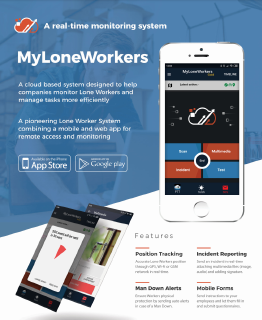
MyLoneWorkers is a comprehensive cloud-based workforce management system designed specifically for field operations and remote blue-collar workers. Built to enhance both operational oversight and employee protection, the system includes a web platform and mobile application for Android and iOS devices.
Through real-time monitoring and automated safety features, MyLoneWorkers helps organizations prevent workplace accidents and respond instantly when a work injury occurs. The platform incorporates technologies such as NFC, Beacon, Virtual Checkpoints, and QR-code scanning. Workers scan designated checkpoints, sending live updates with precise GPS, Wi-Fi, and GSM location data directly to the secure cloud-based system.
If an incident arises, managers receive immediate notification, allowing them to act without delay. Workers can also attach photos, voice notes, written observations, and digital signatures to incident reports, ensuring comprehensive documentation of workplace injuries.
How MyLoneWorkers Reduces Workplace Accidents
1. Man Down Alerts: Immediate Response to Injury at Work
If a worker collapses, falls, or becomes immobile due to a work injury, the Man Down sensor clip automatically triggers an alert to the Monitoring Center.
This ensures:
- Faster emergency response
- Reduced severity of workplace injury
- Accurate timestamp and location reporting
In high-risk environments, response time can determine whether a workplace accident becomes fatal or manageable.
2. SOS and External BLE Panic Button
In the event of a violent incident or hazardous work accident, workers can instantly send an SOS alert. If they cannot access their phone, the external BLE panic button provides an additional layer of protection.
Each alert includes:
- GPS coordinates
- Timestamp
- Real-time notification to managers
- Optional SMS alerts to designated contacts
Immediate escalation reduces both human and financial cost.
3. Welfare Check: Preventing Silent Workplace Injuries
Not all workplace injuries are dramatic. Some injuries at work occur gradually or go unnoticed.
The Welfare Check feature establishes scheduled safety confirmations. If a worker fails to check in, the system generates an alert — preventing prolonged exposure after a work accident.
4. Geofence Alerts: Preventing Risk Before It Escalates
Entering unauthorized or hazardous zones increases the likelihood of workplace accidents.
Geofence alerts notify managers if a worker enters or leaves designated areas unexpectedly — helping prevent dangerous exposure.
5. AI Reports: Turning Data Into Prevention
One of the most overlooked costs of workplace accidents is failure to learn from them.
The AI Reports feature allows managers to ask natural-language questions such as:
- “Show all incidents in the last 30 days.”
- “Which locations have the most workplace injuries?”
- “Which worker triggered SOS alerts this week?”
Instead of navigating complex menus, managers receive instant insights — enabling proactive risk mitigation.
Data transforms workplace accident management from reactive response to predictive prevention.
The ROI of Preventing a Single Workplace Accident
The return on preventing a single workplace injury can be substantial. Avoided medical expenses, reduced downtime, lower insurance premiums, and improved employee retention all contribute to measurable financial benefits.
More importantly, organizations that actively prevent workplace accidents build reputations as responsible employers. Clients and partners value companies that prioritize safety and demonstrate structured risk management. In competitive industries, this reputation becomes a strategic advantage.
Investing in proactive safety solutions is not merely a compliance measure — it is a long-term operational strategy.
Building a Safer Operation: A Strategic Framework
To reduce workplace accidents effectively, organizations should implement a structured approach.
A strong starting point is identifying the specific lone working hazards present in your organization and mapping how they could lead to workplace injuries or a serious work accident.
- 1. Conduct risk assessments for all field roles
- 2. Implement real-time monitoring technology
- 3. Establish automated welfare checks
- 4. Train employees on emergency protocols
- 5. Analyze incident data regularly
- 6. Continuously refine procedures
Technology supports each of these steps by ensuring visibility, accountability, and rapid intervention.
Ready to Improve Safety at Work Across Your Organization?
If your organization manages remote teams, field technicians, security officers, or high-risk operations, investing in a modern safety app is one of the smartest strategic decisions you can make.
MyLoneWorkers provides the real-time monitoring, emergency response, and AI-powered reporting tools your teams need to stay protected and productive.
Beyond Compliance: Creating a Culture That Prevents Workplace Injuries
Many organizations approach workplace accidents from a compliance standpoint. They implement policies, conduct training sessions, and complete required documentation. While these measures are necessary, they are not sufficient to truly reduce workplace injuries.
A culture that prevents injury at work is proactive rather than reactive. It prioritizes visibility, rapid response, and continuous improvement. Employees must know that their safety is actively monitored, that help is available immediately, and that every work accident is analyzed to prevent recurrence.
Leadership plays a decisive role in shaping this culture. When managers invest in tools that provide real-time monitoring, automated alerts, and actionable reporting, they demonstrate that safety is embedded into daily operations — not treated as an afterthought.
Workplace accidents decrease significantly when safety becomes operational strategy rather than regulatory obligation. Organizations that make this shift not only reduce risk, but also strengthen employee trust, productivity, and long-term resilience.
Frequently Asked Questions About Workplace Accidents
What are the most common causes of workplace accidents?
The most common causes of workplace accidents include slips, trips, and falls, equipment misuse, vehicle incidents, fatigue, lack of supervision, and inadequate safety procedures. In lone working environments, delayed response and isolation significantly increase the risk and severity of injury at work.
What should an employer do immediately after a work injury?
After a work injury, employers should ensure the employee receives immediate medical attention, secure the area to prevent further harm, document the incident thoroughly, and report the workplace injury according to local regulatory requirements. A proper investigation should follow to prevent recurrence.
How much does a typical workplace injury cost a company?
The cost of a workplace injury can range from thousands to tens of thousands of euros or pounds, depending on severity. Direct medical costs, compensation claims, insurance increases, lost productivity, and administrative time all contribute to the total financial impact of a work accident.
Why are lone workers at higher risk of workplace accidents?
Lone workers face increased risk because they lack immediate assistance in emergencies. If an injury at work occurs, delays in response can worsen outcomes. Isolation, environmental exposure, and limited supervision all contribute to higher severity workplace injuries in remote roles.
How can technology reduce workplace accidents?
Technology helps prevent workplace accidents through real-time monitoring, automated welfare checks, GPS tracking, and instant emergency alerts. These tools reduce response time, improve visibility, and help organizations identify risk patterns before they lead to serious workplace injuries.
What is the difference between a workplace injury and a work accident?
A work accident refers to the unexpected event that occurs, while a workplace injury is the physical or psychological harm resulting from that event. Not all work accidents result in injury, but most workplace injuries are caused by an underlying accident or hazardous condition.
Are employers legally responsible for preventing injury at work?
Yes. Employers have a legal duty of care to provide a safe working environment, conduct risk assessments, implement safety measures, and respond appropriately to workplace injuries. Failure to prevent foreseeable workplace accidents can result in fines, legal action, and reputational damage.
How can companies proactively prevent workplace injuries?
Companies can proactively prevent workplace injuries by conducting regular risk assessments, implementing lone worker monitoring systems, providing safety training, analyzing incident data, and fostering a culture that prioritizes safety over speed or productivity. Proactive strategies significantly reduce the likelihood of a serious work accident.
Test MyLoneWorkers for Free
Discover how MyLoneWorkers protects lone and field workers with man down alarms, real-time monitoring, and automated safety alerts. No installation or commitment required.
The True Cost of Workplace Accidents: Final Thoughts
A workplace accident is never just an isolated event. One work injury can cascade into operational disruption, financial strain, regulatory risk, and long-term reputational damage. The question is not whether businesses can afford to invest in prevention.
The question is whether they can afford not to.
By leveraging real-time monitoring, automated alerts, AI-powered reporting, and proactive risk management tools, organizations can reduce workplace injuries before they escalate — protecting both their workforce and their bottom line.
If you haven’t yet evaluated the underlying hazards that expose your team to injury at work, we recommend reviewing our in-depth guide on Top Lone Working Hazards and How to Prevent Workplace Accidents to strengthen your overall safety strategy.
If your goal is to minimize workplace accidents while strengthening operational efficiency, a comprehensive workforce safety platform like MyLoneWorkers can help you reduce workplace injuries, strengthen compliance, and prevent the next work accident before it disrupts your operation.
Book a demo and discover how MyLoneWorkers can transform your safety strategy.
About MyLoneWorkers
MyLoneWorkers innovative system reduces the risks and guarantees that every lone worker returns home safely after carrying out their tasks at work which is one of the most basic responsibilities for an employer. It is a real time lone worker monitoring system which skyrockets the efficiency of lone workers’ safety and the completion of their tasks offering them the ability to increase their productivity via technology.