Reducing Workplace Injury Risks With Proactive Workplace Safety
Table of Contents
- The Rising Cost of Workplace Injury in Field Operations
- Workplace Injury Statistics
- Why Reactive Workplace Safety Models Are No Longer Enough
- Common Causes of Workplace Injury Among Lone and Field Workers
- Industries Most Affected by Workplace Injury
- What Is MyLoneWorkers?
- How MyLoneWorkers Works in Real-World Field Environments
- Proactive Workplace Safety Features That Reduce Workplace Injury
- Why Choose MyLoneWorkers for Proactive Workplace Safety?
- Workplace Injury Prevention Best Practices for Employers
- Frequently Asked Questions About Workplace Injury and Workplace Safety
- Conclusion: Building a Safer Future for Field Teams
Workplace injury remains one of the most significant challenges facing organizations with remote and field-based employees. From construction and utilities to security, hospitality, and facilities management, lone and mobile workers are often exposed to unpredictable environments, delayed emergency response times, and limited supervision. Traditional, reactive approaches to workplace safety—responding only after an incident occurs—are no longer enough.
In 2025 and beyond, organizations must shift toward proactive workplace safety strategies that identify risks early, prevent incidents before they escalate, and ensure immediate support when something goes wrong. This is where MyLoneWorkers plays a critical role.
This article explores how proactive safety technology helps reduce workplace injury risks and how MyLoneWorkers empowers businesses to protect their field teams more effectively than ever before.
The Rising Cost of Workplace Injury in Field Operations
A single workplace injury can trigger a chain reaction of consequences:
 Lost productivity and operational downtime
- Increased insurance premiums and compensation claims
- Legal and regulatory penalties
- Long-term employee absence or turnover
- Damage to company reputation
For lone and remote workers, these risks are amplified. When employees work in isolation, help is often minutes—or even hours—away. Without real-time monitoring, minor incidents can quickly turn into serious injuries.
Proactive workplace safety focuses on early detection, continuous monitoring, and rapid response, drastically reducing the likelihood and severity of workplace injuries.
Workplace Injury Statistics
Workplace injury incidents remain one of the leading causes of operational disruption across field-based industries worldwide. Employers increasingly recognize that isolated workers face higher injury severity due to delayed response times, reinforcing the need for proactive workplace safety systems that monitor risks continuously rather than retrospectively.
Why Reactive Workplace Safety Models Are No Longer Enough
Traditional safety programs rely heavily on:
- Incident reporting after the fact
- Manual check-ins
- Paper-based risk assessments
- Static safety policies
While these methods are still important, they fail to address real-time risks faced by field workers. If an employee slips, collapses, or faces a sudden threat, waiting for a scheduled check-in may be too late.
Modern workplace safety requires:
- Continuous visibility into worker status
- Automated alerts when something goes wrong
- Accurate location data
- Fast, coordinated emergency response
This shift from reaction to prevention is exactly what MyLoneWorkers enables.
Common Causes of Workplace Injury Among Lone and Field Workers
Understanding the most common causes of workplace injury is essential to building an effective and proactive workplace safety strategy. Lone and field workers face a unique combination of environmental, physical, and situational risks that are often underestimated in traditional safety planning.
Below are the most frequent workplace injury triggers for remote and mobile employees—and why proactive monitoring is essential to prevent them.
Slips, Trips, and Falls in Uncontrolled Environments
Uneven terrain, poor lighting, wet surfaces, and unfamiliar locations make slips and falls one of the leading causes of workplace injury for field workers. Unlike fixed worksites, these hazards can change daily and are often impossible to eliminate completely.
Without real-time monitoring, a fall can leave a worker injured and unable to call for help—turning a minor incident into a serious medical emergency.
Sudden Medical Emergencies
Heart conditions, dehydration, fatigue, heat exhaustion, and existing health issues can all trigger unexpected medical incidents in the field. When workers operate alone, these emergencies often go unnoticed until it’s too late.
Proactive workplace safety solutions must assume that workers may not be able to request help themselves, making automated alerts and welfare monitoring critical.
Physical Assaults and Security Threats
Lone workers in security, hospitality, maintenance, utilities, and public-facing roles are at increased risk of verbal abuse and physical violence. These incidents are unpredictable and can escalate rapidly.
In these situations, immediate access to discreet emergency alerts is essential to reduce injury severity and ensure fast intervention.
Missed Check-Ins and Delayed Response Times
One of the most dangerous aspects of lone working is delayed discovery. When a worker fails to check in, arrives late at a checkpoint, or misses a scheduled task, it may signal injury, distress, or exposure to danger.
Without automated welfare checks, these warning signs are often missed—dramatically increasing workplace injury risk.
Fatigue and Human Error
Extended shifts, night work, and high-pressure environments contribute to fatigue-related errors. Tired workers are more likely to misjudge risks, overlook hazards, or respond slowly to dangerous situations.
Proactive workplace safety systems help reduce fatigue-related injuries by enforcing structured workflows, timed check-ins, and real-time oversight.
Why Identifying Workplace Injury Risks Is Only the First Step
While understanding workplace injury causes is essential, awareness alone does not prevent incidents. True workplace safety requires systems that actively monitor workers, detect abnormal behavior, and trigger immediate responses—especially when workers cannot help themselves.
This is where technology-driven platforms like MyLoneWorkers transform risk awareness into real-world protection.
Industries Most Affected by Workplace Injury
Workplace injury risks are not evenly distributed across industries. Field-based and lone-working roles consistently experience higher injury rates due to environmental hazards, isolation, and delayed emergency response. Understanding which industries are most affected helps employers prioritize proactive workplace safety strategies where they matter most.
- Construction & Utilities: Workers face constant exposure to heavy machinery, heights, electrical systems, and changing environments. Lone working, night shifts, and remote sites significantly increase workplace injury severity when incidents occur.
- Security & Night Patrols: Security personnel often work alone, during off-hours, and in unpredictable situations. Physical assaults, slips and falls, and delayed assistance make proactive monitoring essential to reduce workplace injury risk.
- Hospitality & Facilities: From hotel night staff to cleaning and maintenance crews, workers frequently operate in isolation. Wet surfaces, manual handling, and public interaction contribute to a wide range of workplace injuries in these environments.
- Maintenance & Technical Services: Technicians working alone on repairs, inspections, or emergency callouts face risks such as confined spaces, faulty equipment, and fatigue—especially when tasks occur outside regular working hours.
- Remote Inspection & Field Services: Inspectors, surveyors, and field service workers often travel between sites and operate in unfamiliar or remote locations. Without real-time oversight, even minor incidents can escalate into serious workplace injuries.
Across all these industries, proactive workplace safety systems play a crucial role in reducing injury frequency, severity, and response times.
Request Your MyLoneWorkers Demo
Get hands-on with a demo account and see how MyLoneWorkers’ man down monitoring system helps you safeguard workers, manage incidents, and stay compliant.
What Is MyLoneWorkers?
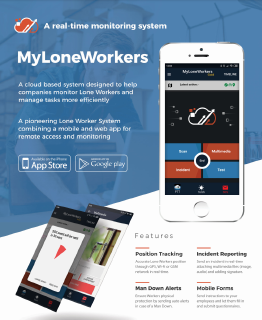
MyLoneWorkers is a cloud-based workforce management and safety platform designed specifically for field operations and lone workers. It combines a powerful web application with intuitive mobile apps (Android and iOS), ensuring maximum prevention, protection, and control for remote blue-collar teams.
The system provides a full suite of safety features, including:
- Man Down alerts
- External BLE panic button
- SafePass
- Welfare Check
- Geofence alerts
Together, these tools allow organizations to monitor, support, and safeguard employees in real time, dramatically reducing workplace injury risks.
How MyLoneWorkers Works in Real-World Field Environments
MyLoneWorkers operates as a real-time online monitoring system for blue-collar and lone workers. Using NFC, Beacon, QR-code, and virtual checkpoint technology, workers interact with predefined locations and tasks directly from their smartphones.
Each scan or interaction sends:
- Accurate GPS, Wi-Fi, or GSM location data
- Time-stamped activity updates
- Incident alerts (if triggered)
All information flows securely to the MyLoneWorkers web application, enabling managers to oversee operations across multiple sites, cities, or countries.
Field workers can also:
- Attach photos, voice notes, written notes, and signatures
- Document hazards or unsafe conditions
- Report incidents instantly
In emergencies, a single press of the SOS button sends immediate alerts with precise location details—ensuring rapid intervention and reduced injury severity.
Proactive Workplace Safety Features That Reduce Workplace Injury
1. Man Down Alerts: Immediate Response When Seconds Matter
One of the most critical tools for preventing severe workplace injury is the Man Down alert.
If a worker collapses, slips, or becomes immobilized and cannot reach their phone, a sensor clip detects abnormal movement or inactivity. The system automatically sends a Man Down notification to the Monitoring Center.
Why this matters:
- Eliminates reliance on manual reporting
- Ensures rapid response to unconscious or injured workers
- Significantly reduces the severity of injuries
This automation transforms workplace safety from reactive to life-saving.
Man Down technology plays a critical role in helping organizations reduce workplace injury risk by ensuring immediate response when a lone worker collapses or becomes immobilized. Learn more about how Man Down alarm systems improve safety for lone and field workers.
2. SOS and Test Alerts: Confidence at the Push of a Button
MyLoneWorkers offers both Test alerts and SOS alerts:
- Test Alert: Confirms system connectivity by sending a timestamp and location to the cloud
- SOS Alert: Instantly triggers an emergency alarm and notification
In urgent situations, workers can send alerts in seconds—without navigating menus or making phone calls. Optional SMS notifications can also be sent to up to three predefined contacts.
This immediate communication capability dramatically reduces response times and minimizes workplace injury consequences.
Instant emergency alerts are a cornerstone of proactive workplace safety, helping organizations respond faster and significantly reduce workplace injury impact during critical situations. Learn how working alone alarms can reduce emergency response times and improve worker protection.
3. Welfare Checks: Preventing Silent Emergencies
The Welfare Check feature allows managers to define regular safety check-in intervals. If a worker fails to confirm their status within the scheduled timeframe, an alert is automatically generated.
Benefits include:
- Early detection of potential incidents
- Reduced risk of prolonged exposure to injury
- Improved accountability and compliance
Welfare Checks are especially valuable in overnight shifts, isolated environments, or high-risk field operations.
Automated welfare checks are a key element of proactive workplace safety, helping teams identify incidents early and prevent escalation. Discover how welfare check features enhance lone worker protection and reduce workplace injuries.
4. External BLE SOS Button: Safety Without a Smartphone
In situations where workers cannot access their smartphones—such as physical confrontations or restricted environments—the external BLE SOS button becomes essential.
With a single press, workers can send a real-time SOS alert directly to the Monitoring Center.
This feature adds a critical layer of workplace safety, ensuring protection even in the most challenging conditions.
Discreet emergency alerting tools are essential for reducing response times and minimizing workplace injury severity during critical incidents. Learn how panic button technology improves workplace safety for lone and field workers.
5. Geofence Alerts: Preventing Hazards Before They Escalate
Geofencing enables organizations to define safe and restricted zones. When workers enter or exit these zones, alerts are triggered automatically.
Geofence alerts help:
- Prevent unauthorized access to hazardous areas
- Monitor high-risk zones
- Reduce exposure-related workplace injuries
By identifying risk-prone locations, companies can take preventive action before incidents occur.
Location-based monitoring is essential for preventing exposure to hazardous areas and strengthening workplace safety policies. See how geofencing technology helps prevent workplace injuries in high-risk environments.
6. SafePass: Extending Workplace Safety Beyond Employees
SafePass allows organizations to protect VIPs, clients, and third parties through a dedicated mobile application.
This feature expands workplace safety strategies beyond internal teams, reinforcing a company-wide culture of protection and responsibility.
Extending safety beyond employees is a vital part of modern workplace safety strategies, especially in environments involving visitors or VIPs. Explore how SafePass enhances personal safety and helps prevent workplace injuries in dynamic environments.
Why Choose MyLoneWorkers for Proactive Workplace Safety?
Organizations choose MyLoneWorkers because it delivers:
- Reliable protection for lone workers and valuable assets
- Cloud-based deployment with no additional installation costs
- Rapid setup and intuitive configuration
- Real-time monitoring across any location
- Automated safety responses that reduce workplace injury risks
- Optimized scheduling and operational efficiency
Most importantly, MyLoneWorkers transforms workplace safety into a living, real-time system rather than a static policy.
For organizations looking to modernize their approach, exploring a comprehensive lone worker safety solution designed to prevent workplace injury is a critical next step.
Optimize Your Scheduling with Workeen AI
Transform your workforce management with Workeen AI, the AI-powered shift management system designed to simplify scheduling for industries with round-the-clock operations. Effortlessly create efficient rosters, manage unexpected absences, and ensure fair work distribution with predictive insights and real-time updates. Boost productivity and compliance while keeping your team informed through instant communication tools.
Workplace Injury Prevention Best Practices for Employers
Preventing workplace injury requires more than policies and checklists. Employers must adopt a proactive, technology-supported approach to workplace safety—especially when managing lone and field-based teams.
Key workplace injury prevention best practices include:
- Risk Assessments: Regularly identify hazards specific to roles, environments, and working conditions, with particular focus on lone working scenarios and remote locations.
- Training & Awareness: Ensure employees understand potential risks, safety procedures, and how to respond effectively during emergencies or unexpected situations.
- Monitoring Lone Workers: Implement real-time monitoring, automated check-ins, and alert systems to maintain visibility over worker safety at all times.
- Emergency Response Planning: Establish clear escalation procedures, fast communication channels, and location-based response protocols to minimize workplace injury impact.
- Continuous Improvement: Review incidents, near misses, and safety data regularly to refine workplace safety strategies and adapt to evolving operational risks.
When combined with modern safety technology, these best practices help organizations move from reactive compliance to true workplace injury prevention.
Frequently Asked Questions About Workplace Injury and Workplace Safety
What is the most common workplace injury among lone and field workers?
The most common workplace injury among lone and field workers involves slips, trips, and falls, especially in uncontrolled or unfamiliar environments. Other frequent injuries include strains from manual handling, medical emergencies, and injuries caused by delayed emergency response. Proactive workplace safety solutions significantly reduce these risks by enabling real-time monitoring and rapid intervention.
Why are lone workers more vulnerable to workplace injuries?
Lone workers are more vulnerable to workplace injury because they often work without direct supervision or immediate assistance. If an incident occurs, delays in detection and response can worsen injury severity. This is why workplace safety strategies for lone workers must include automated alerts, welfare checks, and location tracking.
How does proactive workplace safety reduce workplace injury risks?
Proactive workplace safety focuses on preventing incidents before they escalate. This includes continuous monitoring, automated Man Down alerts, scheduled welfare checks, and instant SOS notifications. By identifying risks early and responding immediately, companies can dramatically reduce both the frequency and severity of workplace injuries.
What technology helps prevent workplace injuries in field operations?
Modern workplace safety technology includes:
- Man Down detection
- Real-time GPS location tracking
- SOS and panic button alerts
- Automated welfare checks
- Geofence monitoring
Platforms like MyLoneWorkers combine all these features into a single cloud-based system designed specifically to reduce workplace injury risks for lone and remote workers.
Are workplace safety systems only for high-risk industries?
No. While industries such as construction, security, utilities, and hospitality face higher risks, any organization with remote or lone workers can benefit from proactive workplace safety systems. Workplace injuries can occur in low-risk environments when workers are isolated or exposed to unpredictable conditions.
How can employers improve workplace safety compliance for lone workers?
Employers can improve workplace safety compliance by:
- Implementing real-time monitoring tools
- Automating safety check-ins and alerts
- Providing easy-to-use emergency response options
- Documenting incidents digitally for audits and reporting
These measures not only reduce workplace injury risks but also demonstrate a strong commitment to employee wellbeing and regulatory compliance.
Test MyLoneWorkers for Free
Discover how MyLoneWorkers protects lone and field workers with man down alarms, real-time monitoring, and automated safety alerts. No installation or commitment required.
Conclusion: Building a Safer Future for Field Teams
Reducing workplace injury is no longer about reacting faster—it’s about preventing incidents before they happen. Proactive workplace safety strategies, powered by intelligent technology, are now essential for any organization managing lone or remote workers.
By combining real-time monitoring, automated alerts, precise location tracking, and intuitive emergency tools, MyLoneWorkers empowers businesses to:
- Protect their people
- Reduce risk exposure
- Improve compliance
- Build trust with employees
In an increasingly complex field environment, proactive workplace safety is not optional—it’s a responsibility. With MyLoneWorkers, that responsibility becomes a competitive advantage.
Reduce Workplace Injury Risks With Proactive Workplace Safety Today!
Start protecting your lone and field workers today. Book a demo to see how MyLoneWorkers’ Man Down alarm systems enable real-time monitoring and faster emergency response, or contact our team to learn how a modern lone worker solution can strengthen workplace safety, compliance, and peace of mind across your organisation.
About MyLoneWorkers
MyLoneWorkers innovative system reduces the risks and guarantees that every lone worker returns home safely after carrying out their tasks at work which is one of the most basic responsibilities for an employer. It is a real time lone worker monitoring system which skyrockets the efficiency of lone workers’ safety and the completion of their tasks offering them the ability to increase their productivity via technology.