The ROI of Safety at Work: How Investing in a Safety App Reduces Risk, Costs, and Downtime
Table of Contents
- Why Safety at Work Is a Financial Priority — Not Just a Compliance Issue
- Safety at Work Standards and Regulatory Guidance
- The Hidden Costs of Poor Safety Management
- How a Safety App Improves Safety at Work Proactively
- Introducing MyLoneWorkers: A Complete Safety at Work Ecosystem
- The Financial ROI of Investing in a Safety App
- The Compounding Effect of Safety Investment
- Calculating the ROI of Safety at Work
- Why Cloud-Based Infrastructure Matters
- From Reactive Safety to Predictive Protection
- The Competitive Advantage of Digital Safety at Work
- Frequently Asked Questions (FAQ) About Safety at Work and Safety Apps
- Final Thoughts: Safety at Work Is a Strategic Investment
In high-risk field environments, safety at work is no longer just a regulatory requirement — it is a strategic investment. For organizations managing remote teams, field technicians, security officers, facility managers, and blue-collar workers, the financial impact of workplace incidents can be devastating.
From workers’ compensation claims and legal penalties to operational downtime and reputational damage, the cost of inadequate safety measures adds up quickly. That’s why forward-thinking companies are shifting from reactive safety policies to proactive, technology-driven solutions.
One of the most powerful tools leading this transformation is the modern safety app.
In this article, we’ll break down the true return on investment (ROI) of safety at work and explain how investing in a comprehensive safety app reduces risk, lowers costs, and minimizes downtime across field operations.
Why Safety at Work Is a Financial Priority — Not Just a Compliance Issue
Many organizations still view safety at work as a compliance checkbox. While regulations matter, the financial reality goes much deeper.
Workplace incidents can lead to significant financial consequences, including medical and compensation expenses, legal costs, regulatory fines, increased insurance premiums, operational delays, lost productivity, equipment damage, employee turnover, and long-term reputational harm. When these factors accumulate, even a single serious incident can create financial strain that impacts the entire organization.
Even a single serious incident can cost tens of thousands — or even hundreds of thousands — of dollars.
The real ROI of safety at work comes from preventing these incidents before they happen.
Safety at Work Standards and Regulatory Guidance
The importance of safety at work is reinforced by leading regulatory bodies and occupational health authorities worldwide. Organizations such as the Occupational Safety and Health Administration (OSHA) and the European Agency for Safety and Health at Work (EU-OSHA) consistently emphasize that employers are legally responsible for protecting workers from foreseeable risks.
According to guidance published by OSHA, employers must provide a workplace free from recognized hazards that are likely to cause serious harm. Similarly, the HSE outlines clear employer duties regarding risk assessment, incident reporting, and worker protection in high-risk environments.
Beyond legal compliance, industry insurance reports regularly show that companies investing in structured safety management systems experience fewer claims and reduced long-term liability costs. Digital safety solutions and real-time monitoring tools are increasingly recognized as best practices for strengthening workplace risk management.
By aligning your safety at work strategy with established regulatory frameworks and adopting a modern safety app to support compliance, your organization not only reduces risk but also demonstrates proactive leadership in workforce protection.
The Hidden Costs of Poor Safety Management
To understand ROI, you must first understand what you’re currently risking.
1. Direct Costs
 Workers’ compensation claims
- Medical treatment expenses
- Emergency response costs
- Equipment replacement
2. Indirect Costs
Studies consistently show that indirect costs can be 2–4 times higher than direct costs.
A proactive safety app helps address both.
How a Safety App Improves Safety at Work Proactively
Traditional safety programs often rely on paper reports, manual check-ins, and delayed communication. That model leaves gaps.
A modern safety app transforms safety at work by enabling:
Instead of reacting to accidents, companies can identify risks early and prevent them altogether.
Modern organizations are increasingly moving beyond basic mobile tools and investing in comprehensive workplace safety software that centralizes risk management, monitoring, and reporting in one environment. A robust lone worker monitoring system combined with a field safety management platform allows businesses to gain complete visibility over remote teams while strengthening overall safety at work through structured, technology-driven processes.
If you’d like a deeper understanding of how workplace safety software supports field teams and lone workers in real-world environments, explore our complete guide to workplace safety software and its role in modern safety management.
Introducing MyLoneWorkers: A Complete Safety at Work Ecosystem
What is MyLoneWorkers?
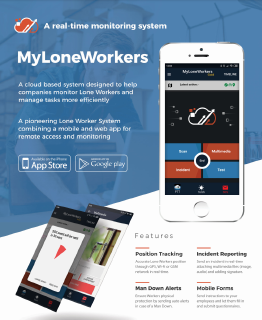
MyLoneWorkers is a comprehensive cloud-based workforce management system for field operations and field services, designed to enhance the management and safety of remote blue-collar workers.
The system consists of both a web and mobile application (Android and iOS), ensuring maximum prevention and protection for lone workers and field teams.
As a comprehensive workforce safety solution, MyLoneWorkers functions as more than just a safety app. It operates as a digital safety management system that integrates emergency response, compliance tracking, operational oversight, and performance analytics into a single cloud-based platform designed specifically for modern field environments.
It provides a full suite of safety features, including:
These tools ensure companies can monitor, support, and safeguard their workforce efficiently — offering a reliable solution for remote worker protection and well-being.
How MyLoneWorkers Works
MyLoneWorkers operates as a real-time online management system that monitors blue-collar workers using:
Workers scan tags placed at specific locations. Each scan instantly notifies the Monitoring Center of updates or incidents. Along with accurate GPS, Wi-Fi, and GSM location data, information is securely transmitted to the cloud-based web application.
Managers can:
Workers can also attach:
In case of danger, pressing the SOS button sends an immediate alert with precise location data, enabling rapid emergency response.
The Financial ROI of Investing in a Safety App
Let’s break down exactly how a safety app generates measurable ROI.
1. How a Safety App Reduces Workplace Incidents
The most obvious ROI comes from incident prevention.
Features like:
dramatically reduce response times during emergencies.
Prevention remains the most cost-effective safety strategy. Implementing proactive workplace safety strategies allows organizations to identify hazards early, reduce incident frequency, and build a stronger culture of safety at work supported by intelligent technology.
The Man Down functionality, using a sensor clip worn on a worker’s uniform, automatically sends alerts if a worker collapses or falls — even if they cannot access their smartphone.
Faster response times mean:
Preventing even one major incident can justify the cost of a safety app for years.
To understand the full impact of automated emergency detection, you can explore in more detail how Man Down systems improve field worker protection and why they are becoming a standard component of modern safety at work strategies. Integrating automatic fall detection into your safety app significantly increases response speed and reduces the severity of workplace injuries.
2. How a Safety App Lowers Insurance Premiums
Insurance providers assess risk levels when determining premiums.
Organizations that demonstrate:
are often viewed as lower-risk operations.
Over time, improved safety at work can lead to:
This translates into lower insurance premiums and improved insurability.
3. How a Safety App Minimizes Operational Downtime
Downtime is expensive.
When a worker is injured or an incident occurs, operations often come to a halt. Supervisors must investigate the situation, replacement staff must be arranged, and project deadlines can quickly fall behind schedule. These disruptions not only affect productivity but also create additional operational and financial pressure on the organization.
A safety app minimizes downtime through:
Instead of waiting for manual reports, managers know instantly what’s happening.
4. How a Safety App Increases Productivity and Accountability in Field Operations
A safety app doesn’t only prevent emergencies — it improves daily efficiency.
MyLoneWorkers includes:
Instant reporting saves administrative time and allows leaders to focus on proactive safety improvements.
Increased visibility improves accountability, which directly boosts productivity.
Real-time visibility is one of the most powerful advantages of a modern safety app. Discover how real-time reporting capabilities enhance operational efficiency while strengthening safety at work across distributed teams and field environments.
5. How a Safety App Strengthens Compliance and Legal Protection
Failure to ensure safety at work can result in significant legal consequences.
A safety app strengthens compliance by:
In the event of an investigation, companies can demonstrate:
This reduces liability exposure and legal risk.
For a broader overview of how digital systems strengthen safety and compliance processes across field operations, you can review our detailed breakdown of workplace safety software and how it supports regulatory alignment and structured documentation.
Maintaining compliance is not only about avoiding penalties but also about demonstrating structured risk management. If you want a deeper understanding of regulatory responsibilities and employer obligations, we recommend reviewing our guide on real-time reporting capabilities and how digital tools strengthen compliance documentation.
6. How a Safety App Improves Employee Retention and Workplace Morale
Safety at work is not just financial — it is cultural.
Employees who feel protected:
Replacing skilled field workers is expensive. Recruitment, onboarding, and training costs quickly add up.
A visible investment in a safety app sends a strong message:
“We value your well-being.”
That cultural shift strengthens retention and protects long-term organizational stability.
Request Your MyLoneWorkers Demo
Get hands-on with a demo account and see how MyLoneWorkers’ man down monitoring system helps you safeguard workers, manage incidents, and stay compliant.
The Compounding Effect of Safety Investment
The ROI of a safety app isn’t isolated. It compounds.
For example:
Over time, safety at work evolves from a cost center into a strategic advantage.
Key Features That Drive ROI
Here’s how specific MyLoneWorkers features directly support ROI:
Each of these contributes to measurable cost reduction.
Calculating the ROI of Safety at Work
Here’s a simplified example:
If your company experiences:
Total annual cost: €71,000
If a safety app reduces incidents by even 40%, that’s a savings of €28,400 in one year — not including insurance reductions or productivity gains.
Now compare that to the cost of implementing a cloud-based safety solution.
The ROI becomes clear.
Why Cloud-Based Infrastructure Matters
MyLoneWorkers requires no additional installation costs.
Benefits include:
The lower the implementation barrier, the faster you see returns.
From Reactive Safety to Predictive Protection
The future of safety at work is predictive.
With AI Reports and centralized data analysis, companies can:
A safety app transforms safety from reaction to prevention.
By leveraging advanced employee safety technology, organizations can shift from manual oversight to intelligent automation. Data-driven insights generated by a connected field safety management platform allow companies to anticipate risks, refine training programs, and continuously improve safety at work through predictive analytics and real-time operational awareness.
And prevention is where ROI multiplies.
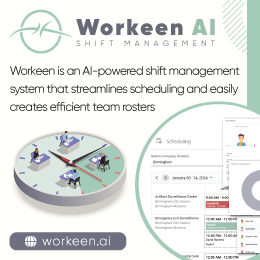
Optimize Your Scheduling with Workeen AI
Transform your workforce management with Workeen AI, the AI-powered shift management system designed to simplify scheduling for industries with round-the-clock operations. Effortlessly create efficient rosters, manage unexpected absences, and ensure fair work distribution with predictive insights and real-time updates. Boost productivity and compliance while keeping your team informed through instant communication tools.
The Competitive Advantage of Digital Safety at Work
In today’s competitive field service and facility management industries, safety at work is no longer just an operational responsibility — it is a differentiator.
Clients, contractors, and regulatory bodies increasingly expect companies to demonstrate structured, technology-driven safety processes. When bidding for contracts, organizations that can show real-time monitoring, automated reporting, and documented incident management often gain a significant competitive edge.
A modern safety app plays a critical role in this transformation.
With MyLoneWorkers, companies can present:
This level of visibility and documentation strengthens credibility during audits and contract negotiations.
Beyond compliance, digital safety at work improves brand reputation. Companies known for protecting their employees attract higher-quality talent and long-term business partnerships. In industries such as security, construction, facility management, utilities, and hospitality, clients prefer providers who demonstrate proactive safety management.
Additionally, enterprise clients increasingly require subcontractors to prove their safety infrastructure before awarding projects. A robust safety app becomes part of your value proposition.
Instead of simply stating, “We prioritize safety at work,” your organization can prove it with data.
This competitive positioning leads to:
When safety at work is supported by intelligent digital systems, it becomes more than a cost-control mechanism — it becomes a growth strategy.
In this way, investing in a safety app does not only reduce risk and downtime. It actively drives long-term commercial success.
Understanding ROI is essential — but choosing the right digital foundation matters just as much. If you’re evaluating long-term safety technology for your organization, start with our complete guide to workplace safety software to understand the systems that power effective field protection.
Ready to Improve Safety at Work Across Your Organization?
If your organization manages remote teams, field technicians, security officers, or high-risk operations, investing in a modern safety app is one of the smartest strategic decisions you can make.
MyLoneWorkers provides the real-time monitoring, emergency response, and AI-powered reporting tools your teams need to stay protected and productive.
Frequently Asked Questions (FAQ) About Safety at Work and Safety Apps
1. What does safety at work mean in field operations?
Safety at work in field operations refers to the systems and procedures used to protect employees who work remotely or in high-risk environments. It includes real-time communication, emergency response tools, risk monitoring, and compliance documentation. Because field workers often operate alone, technology plays a crucial role in ensuring immediate support and protection.
2. How does a safety app improve safety at work?
A safety app improves safety at work by providing real-time alerts, GPS tracking, welfare checks, and automatic emergency notifications such as Man Down detection. Instead of relying on manual reporting, managers gain instant visibility into worker status and location, allowing faster response and reduced incident severity.
3. Is investing in a safety app cost-effective?
Yes, a safety app is cost-effective because it helps prevent costly workplace incidents, reduces downtime, and lowers insurance and legal risks. Even preventing one serious accident can offset the investment. Over time, improved safety performance leads to measurable financial savings.
4. Which industries benefit most from a safety app?
Industries with remote, mobile, or high-risk workers benefit the most. This includes security services, construction, utilities, facility management, hospitality, and maintenance teams. In these sectors, maintaining high standards of safety at work is essential for both compliance and operational continuity.
5. What features should a modern safety app include?
A modern safety app should include Man Down alerts, SOS functionality, welfare checks, GPS tracking, geofence alerts, and digital incident reporting. Advanced solutions may also offer asset tracking, time and attendance management, and AI-powered reporting to support proactive safety management.
6. How does a safety app reduce downtime?
A safety app reduces downtime by enabling immediate response during emergencies and simplifying incident documentation. Faster intervention limits operational disruption, while proactive monitoring helps prevent incidents before they escalate.
7. Can a safety app support compliance?
Yes, a safety app strengthens compliance by creating digital records of alerts, check-ins, and incidents. These audit trails demonstrate that the company actively enforces safety at work procedures, which is critical during inspections or legal reviews.
Test MyLoneWorkers for Free
Discover how MyLoneWorkers protects lone and field workers with man down alarms, real-time monitoring, and automated safety alerts. No installation or commitment required.
Final Thoughts: Safety at Work Is a Strategic Investment
The question is no longer whether companies can afford to invest in safety at work.
The real question is:
Can they afford not to?
A modern safety app like MyLoneWorkers:
The ROI is measurable. The protection is tangible. The cultural impact is lasting.
Investing in safety at work is not just about protecting employees — it’s about protecting your organization’s future.
If you are ready to transform safety from an expense into a strategic advantage, it’s time to invest in a safety app designed for today’s field operations. Because when safety improves, everything improves — productivity, profitability, and peace of mind.
Don’t wait for an incident to expose safety gaps. Take a proactive approach to safety at work today.
Book a demo and discover how MyLoneWorkers can transform your safety strategy.
About MyLoneWorkers
MyLoneWorkers innovative system reduces the risks and guarantees that every lone worker returns home safely after carrying out their tasks at work which is one of the most basic responsibilities for an employer. It is a real time lone worker monitoring system which skyrockets the efficiency of lone workers’ safety and the completion of their tasks offering them the ability to increase their productivity via technology.